
Documented by Amrit Panigrahy
There is a specific kind of silence that falls over a coastal fishing village when a storm rolls in.
It isn’t a literal silence, the wind is loud, and the surf is deafening, but it’s an economic one. In a place like Penthakata, a community built entirely on the daily rhythm of the tides, a weather ban doesn’t just mean a change of plans. It means the entire engine of life abruptly stops.
When you stand on this beach on a day like this, you realize how small we really are.
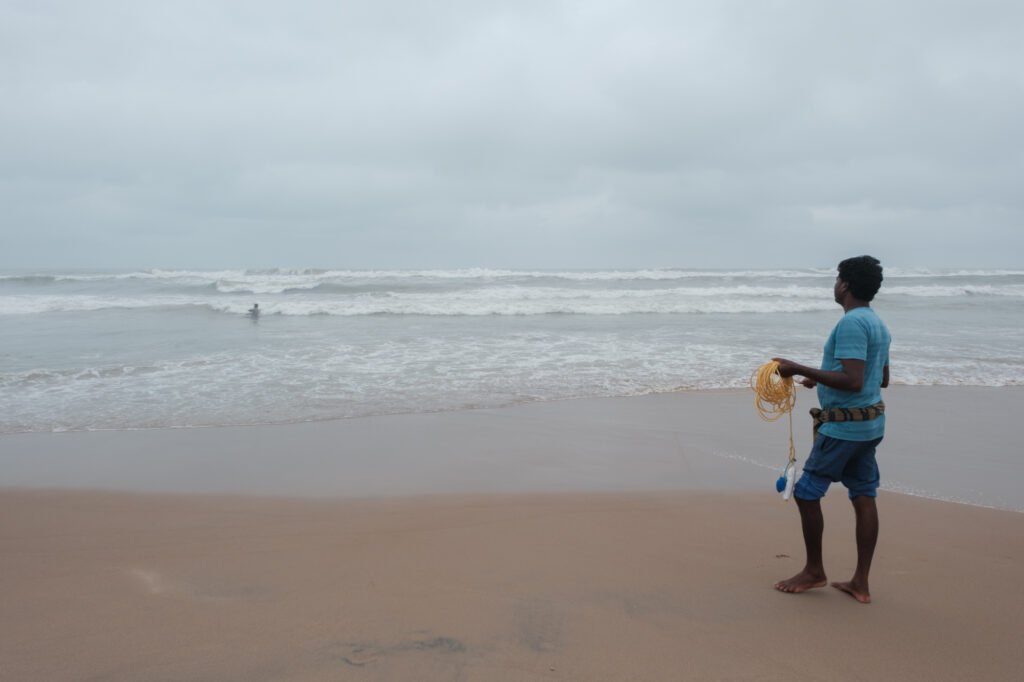
You see it immediately in how the men watch the water. They don’t look at the ocean the way a traveler does. Standing at the edge of the surf holding a coil of rope while his mate fixes the fishing net, he is looking at a locked door. He is reading the swells, calculating the risk, and coming to the quiet, heavy realization that the sea is simply not going to let them in today. The water is their workplace, their provider, and today, it is an immovable wall.
When the water is off-limits, the beach transforms from a launchpad into a parking lot. Walking among these massive, colorful wooden hulls, you feel a strange sense of displacement. These boats are heavy, imposing, and completely useless sitting on the sand. They are built to cut through the ocean, and seeing them dragged up onto the shore, trapped by the weather, feels unnatural. They sit there as giant, colorful reminders of the work that isn’t getting done.
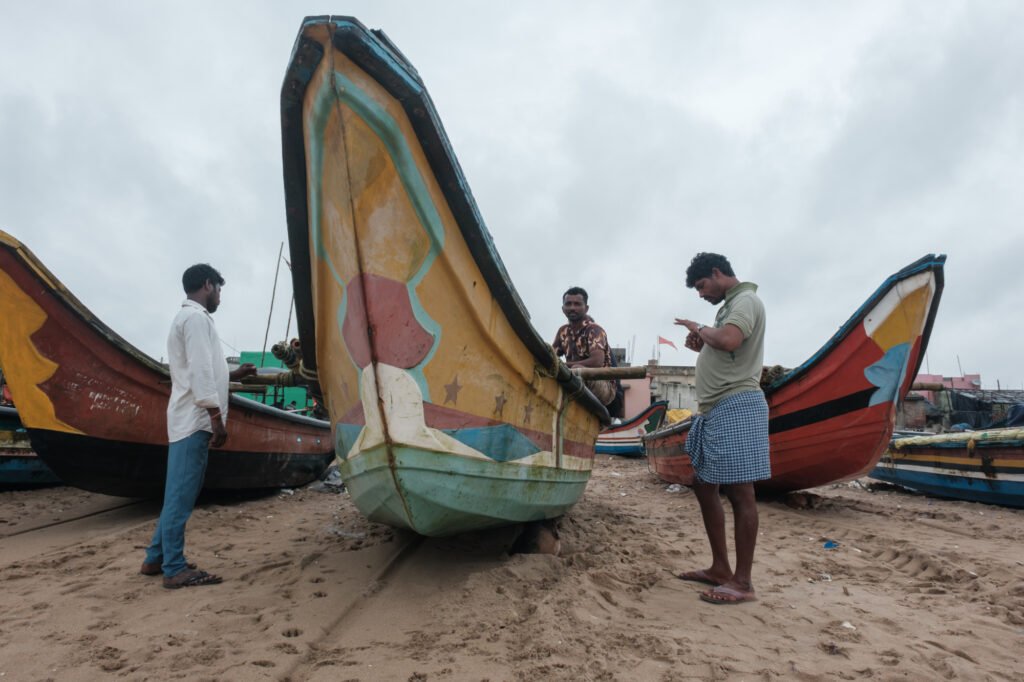
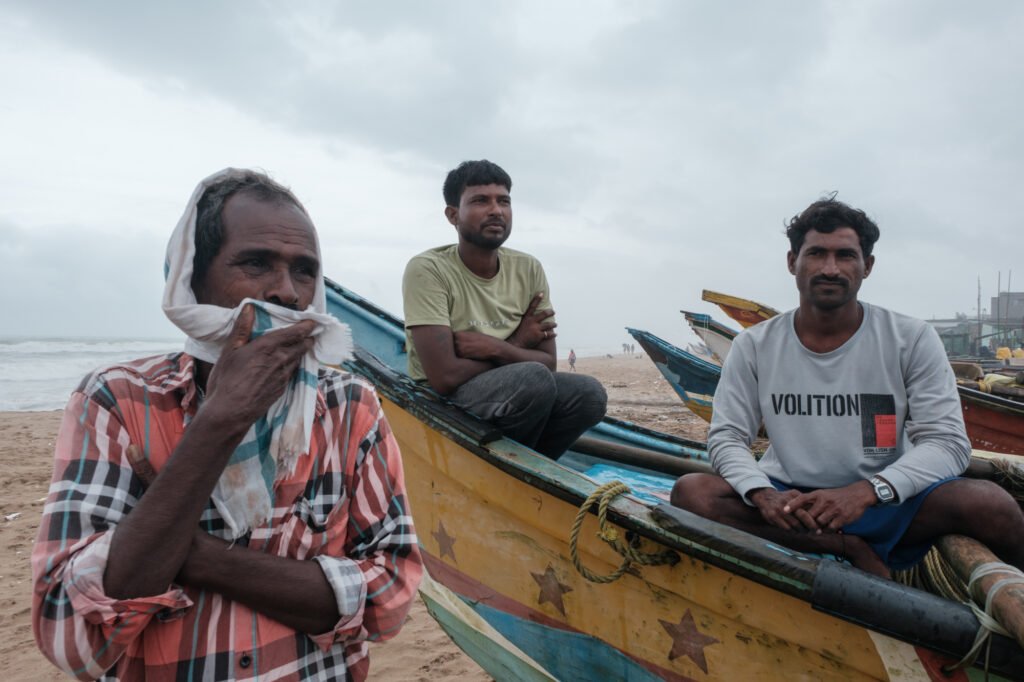
So, what do men built for hard labor do when they aren’t allowed to work? They wait.
If you sit with them in the dry hulls of these grounded boats, the air feels heavy with resignation. There isn’t panic—they have seen storms before—but there is a deep, quiet frustration. You can see it in their posture and the way they cover their mouths against the blowing sand. It is the exhausting reality of having mouths to feed at home, a boat ready to sail, and absolutely zero control over when you can start.
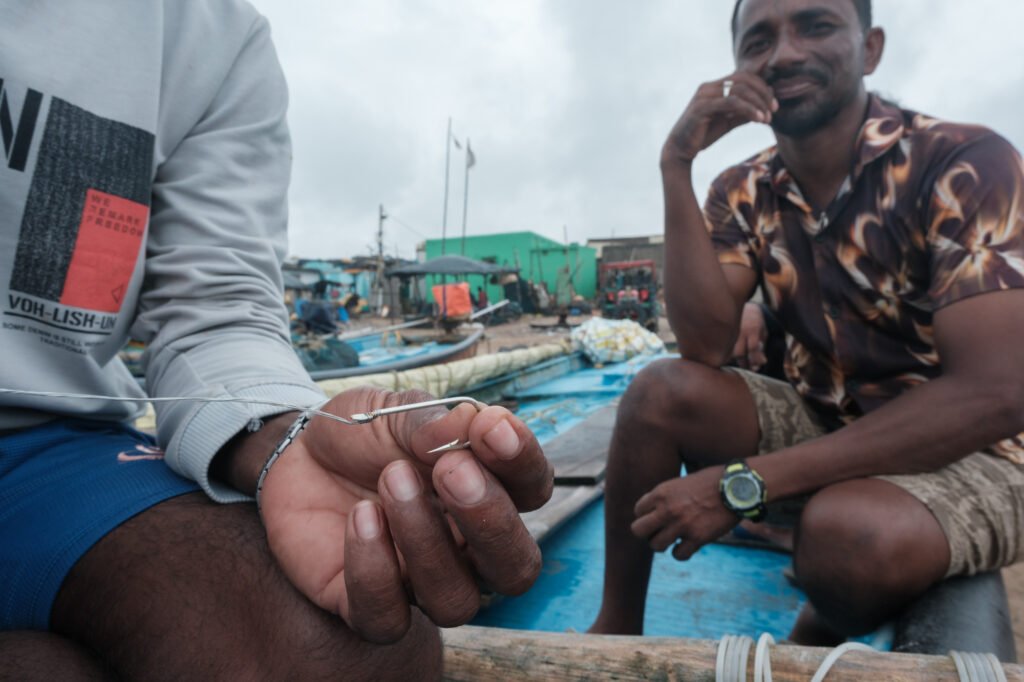
That frustration lives in the details. You look down and see hands that know exactly what to do, holding gear that is rigged, sharpened, and completely ready. A heavy fishing hook bound with wire is a tool of pure purpose. Seeing it held idly in a calloused hand is a reminder of all this suspended potential. The preparation is perfect. The timing is just wrong.
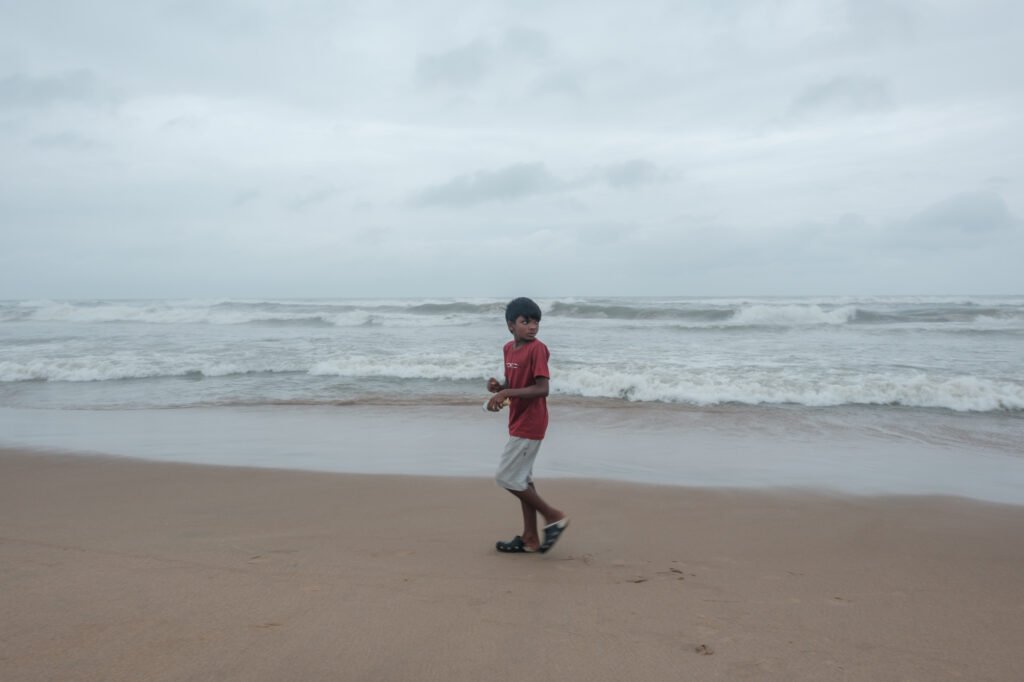
As the morning bleeds into the afternoon, time begins to stretch. Without the frantic, loud, chaotic sorting of the daily catch to break up the hours, the beach suddenly feels far too vast. A boy walking alone across the flat gray sand looks swallowed by the landscape. When you are waiting for a storm to break, the minutes drag. The horizon offers no answers, and the empty space around you just amplifies the feeling of being stuck.
Eventually, the waiting becomes too much, and the community has to manufacture its own escape. A few yards away, a blue boat deck is turned into a makeshift casino.
This isn’t just a casual game of cards to pass the time; look at the intensity on their faces. Look at the man pressing his hand hard into his forehead. They pour all of their restless, pent-up energy into this small circle. It is a necessary distraction. If they can’t fight the ocean today, they can at least fight each other over a hand of cards, forgetting the gray skies for just a little while.

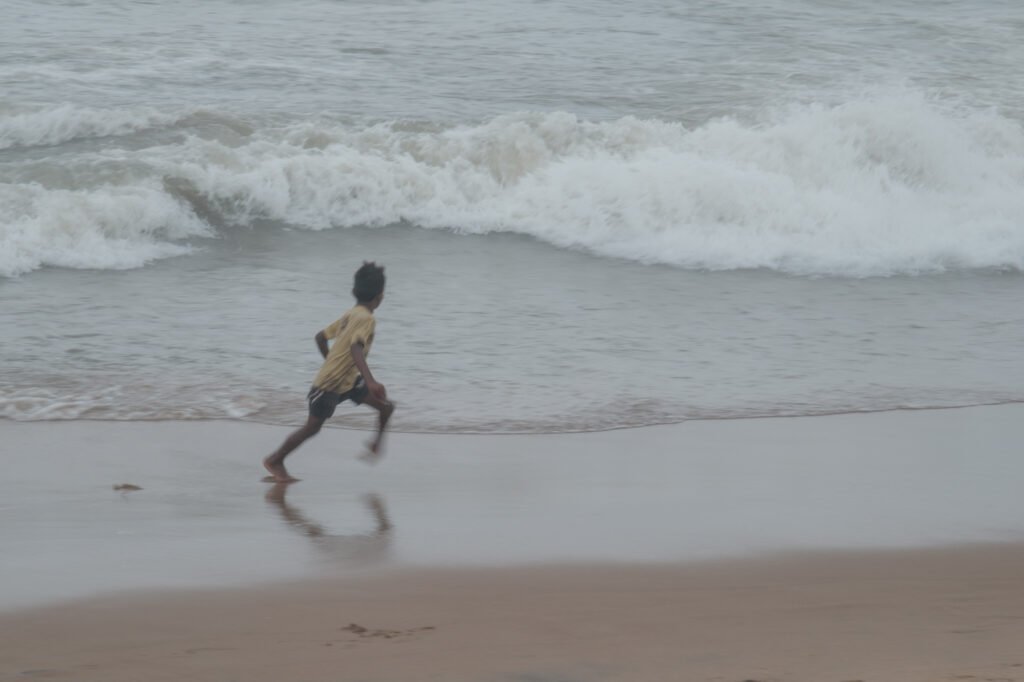
But the weight of a weather ban is only carried by the adults. If you look away from the grounded boats and the anxious men, the mood shifts entirely. To a child, a closed ocean doesn’t mean a lost paycheck; it just means a wider playground. A boy sprinting across the wet sand, a blur of pure kinetic joy against the crashing waves, reminds you that life here doesn’t actually stop—it just changes shape.
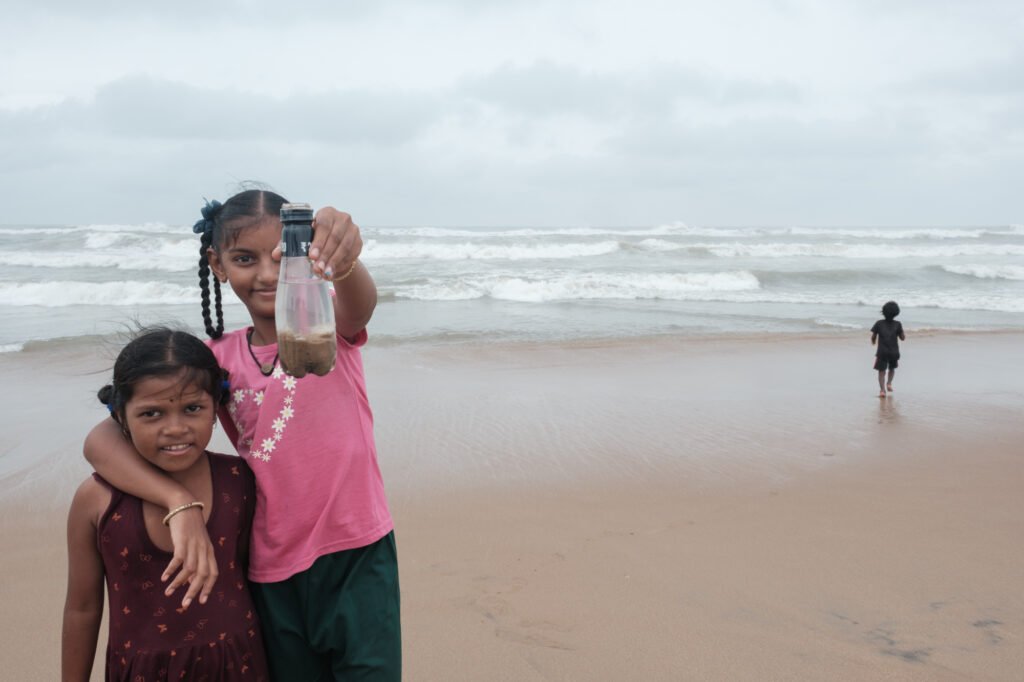
Two girls standing by the churning surf, proudly holding up a plastic bottle filled with sea-bugs, seawater and sand, look right at you and smile. They are making their own joy out of whatever the tide washed in. It’s a quiet reminder that while the livelihood of the village might be put on pause, the spirit of the people who call this sand home never is.
The sea said no today. The boats didn’t launch, the nets stayed dry, and the men will have to try again tomorrow. But the pulse of Penthakata is resilient.