
Documented by Ashutosh Padhy

I arrived in Raghurajpur with my camera, expecting to photograph Pattachitra. I left thinking about the people instead.
Over two days, I wandered through narrow lanes where every wall seemed to tell a different story. Homes weren’t simply painted; they carried generations of memory. As I spoke with artisans, I realised that their work was not driven by deadlines but by patience. One artist told me, “ The most important thing a person can have in life is patience. Everything else comes with time.” Those words stayed with me long after I left.
What fascinated me most wasn’t just the paintings, but the people who quietly dedicate their lives to preserving them. The precision of their hands rivalled machine-made perfection, yet every line was drawn slowly, deliberately, and by hand. This photo essay is my attempt to look beyond Raghurajpur as a tourist destination and meet the families who continue to keep its traditions alive every single day.
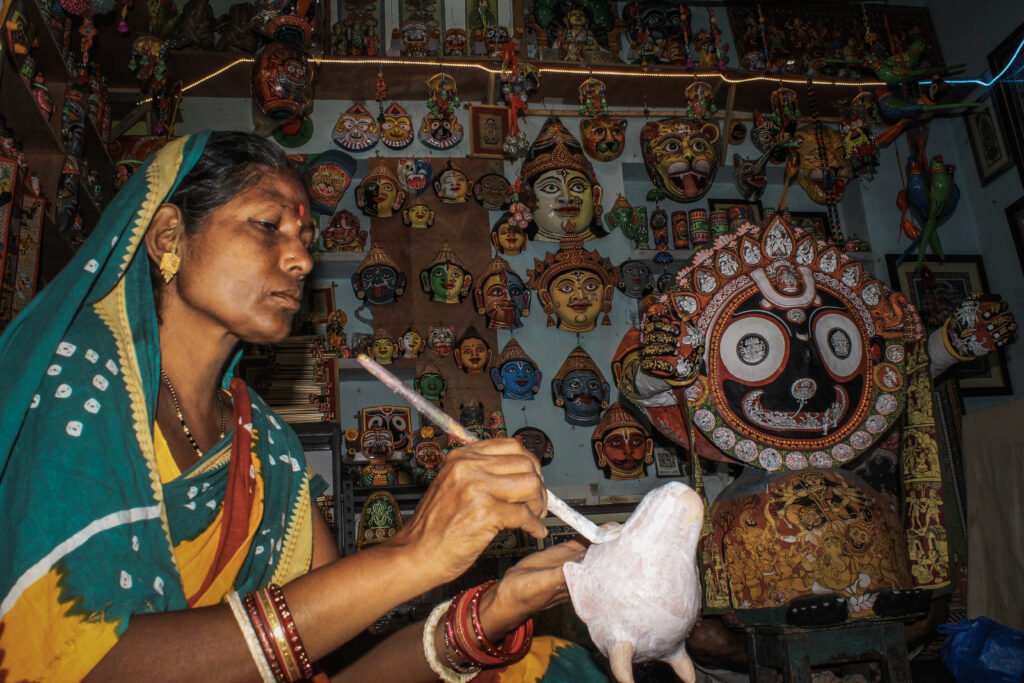
Before I met the artists, I met their work. A single brush moved steadily across the canvas, adding details so fine that they seemed almost impossible to create by hand. Watching this process up close changed the way I looked at every finished painting. Behind every intricate pattern is time, patience, and years of practice that can never be rushed.
Inside a modest room filled with colours and familiar faces of Lord Jagannath, an artisan worked with complete focus. There was no urgency in her movements. Every stroke carried the confidence of someone who had repeated the same tradition for years. In that quiet space, painting felt less like a profession and more like a form of devotion.
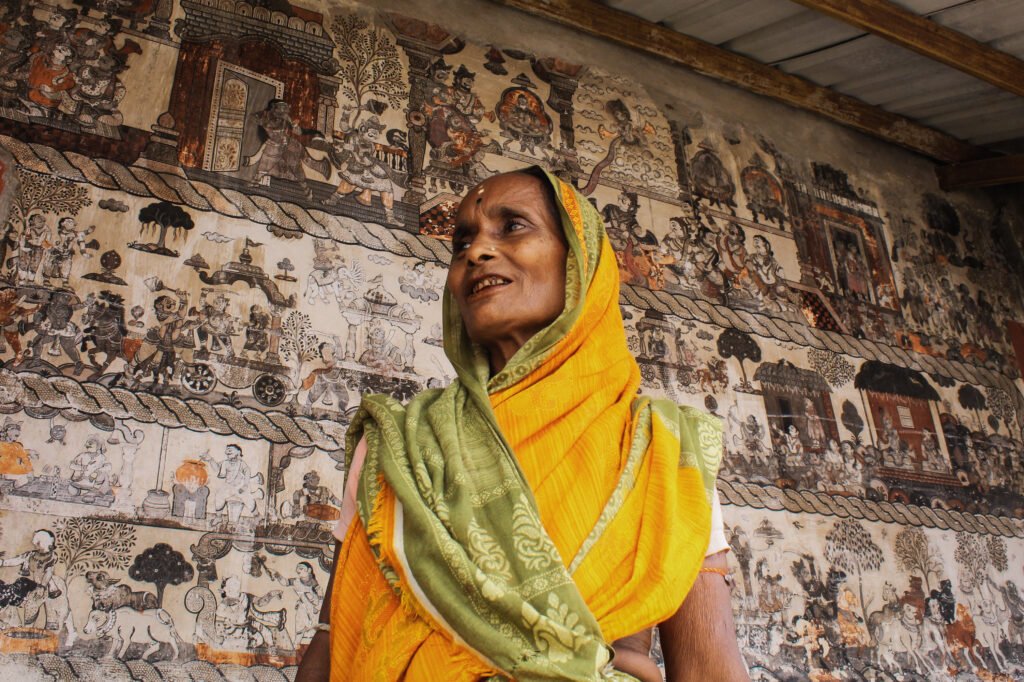
In Raghurajpur, the walls are never just walls. Murals surround everyday life, turning ordinary homes into living galleries. Standing before one such wall, I realised that the people here don’t simply preserve heritage, they live inside it. What visitors admire as art has become the natural backdrop of their daily lives.
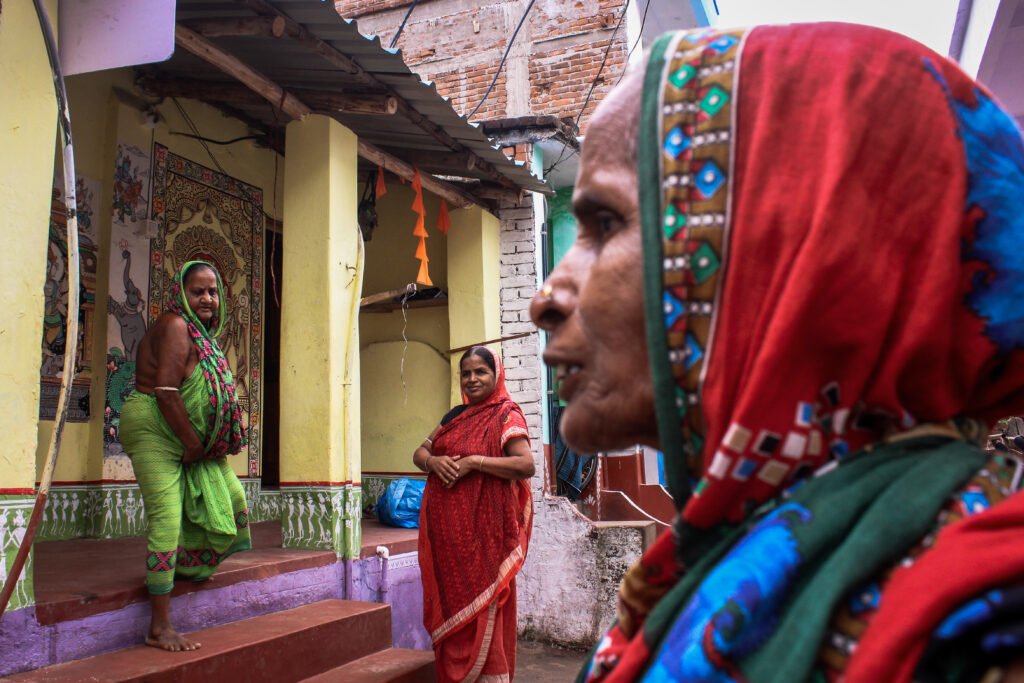
Walking through the narrow lanes, I often felt that every doorway held a story waiting to be heard. As one woman looked across the street, another quietly watched from her doorstep. These small moments reminded me that Raghurajpur is more than an artists’ village, it is a neighbourhood where life unfolds gently between painted homes and familiar faces
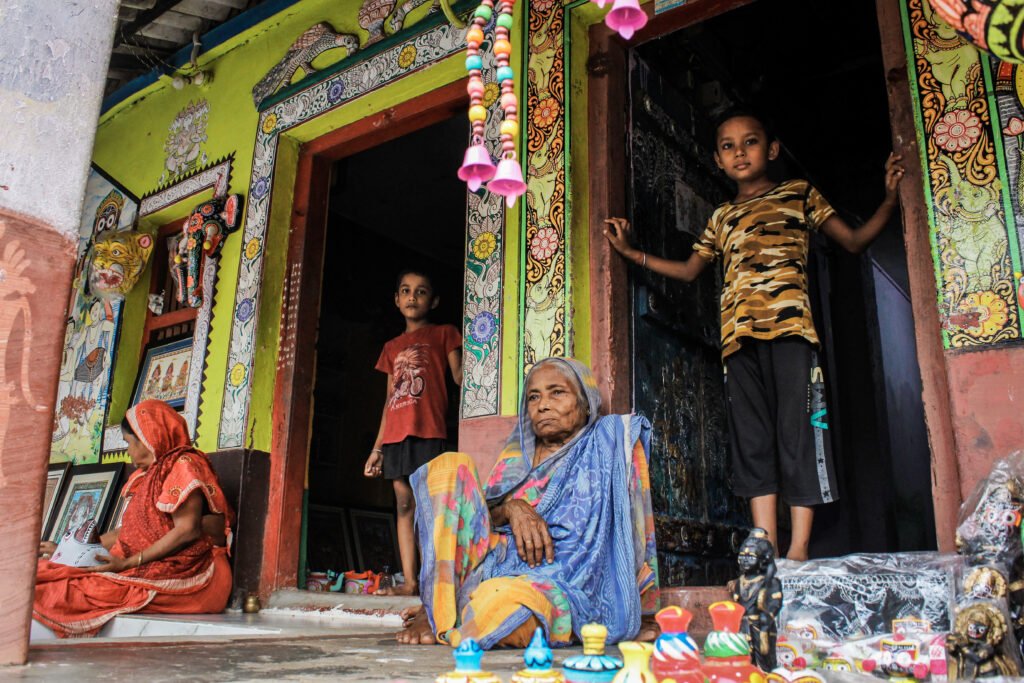
What struck me most was how naturally art blended into family life. Children stood at the doorway while elders sat nearby, surrounded by sculptures, paintings, and unfinished work. Creativity here isn’t reserved for workshops. It grows inside homes, where generations witness the craft every single day before eventually becoming part of it themselves.
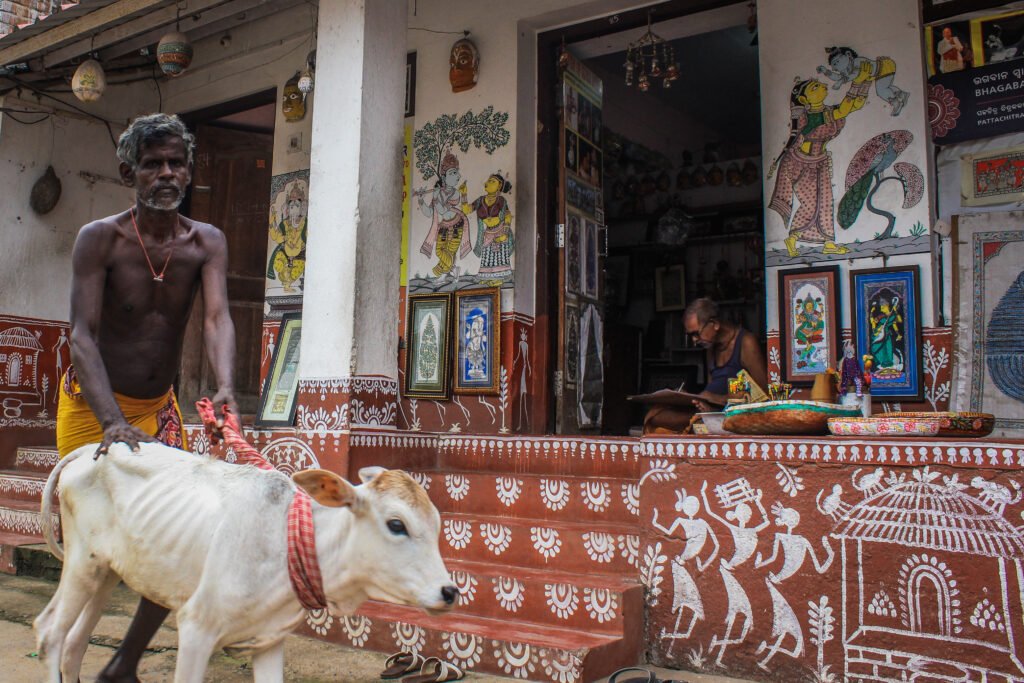
An elderly artisan stood outside his home while a calf wandered quietly across the courtyard. It was a simple scene, yet it captured something important: the tradition of Raghurajpur exists alongside everyday life. Behind every celebrated artwork are ordinary routines, conversations, and families who continue living with remarkable simplicity.
Among everyone I met, one elderly artisan stayed with me the longest. Despite his age, he continued working with the same dedication that had shaped his entire life. The room around him displayed decades of artistic practice, but it was his quiet determination that spoke the loudest. Some traditions survive because people simply refuse to stop creating.
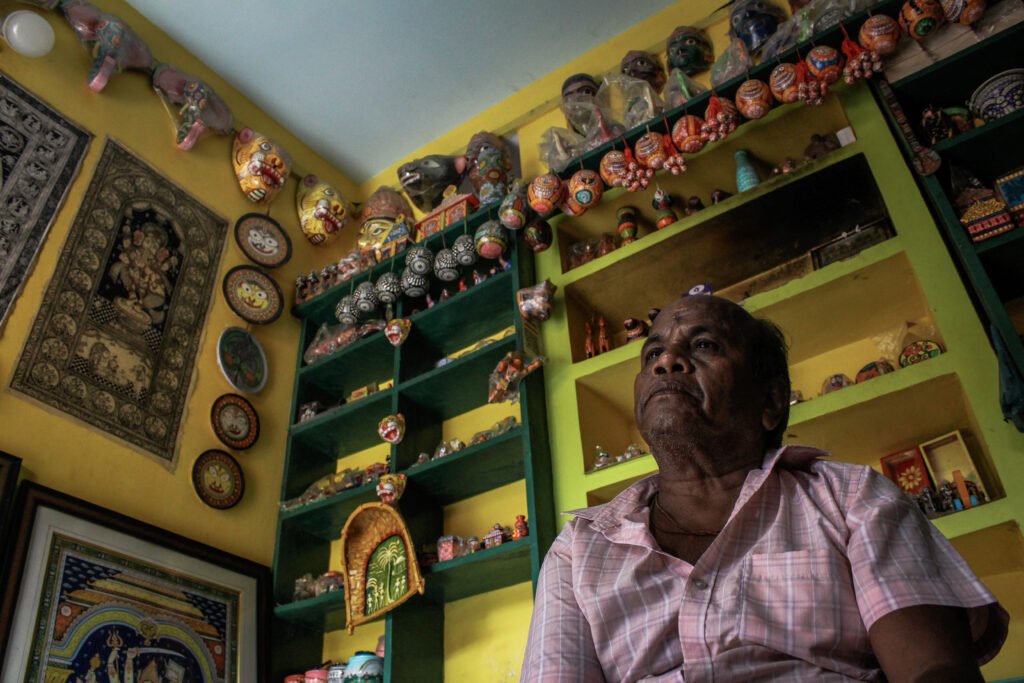
His portrait reveals more than age. It reflects years spent protecting an art form that has travelled far beyond the village itself. Looking into his eyes, I couldn’t help thinking about the countless paintings, students, and stories that may have passed through his hands. Some artists leave signatures; others leave generations behind them.
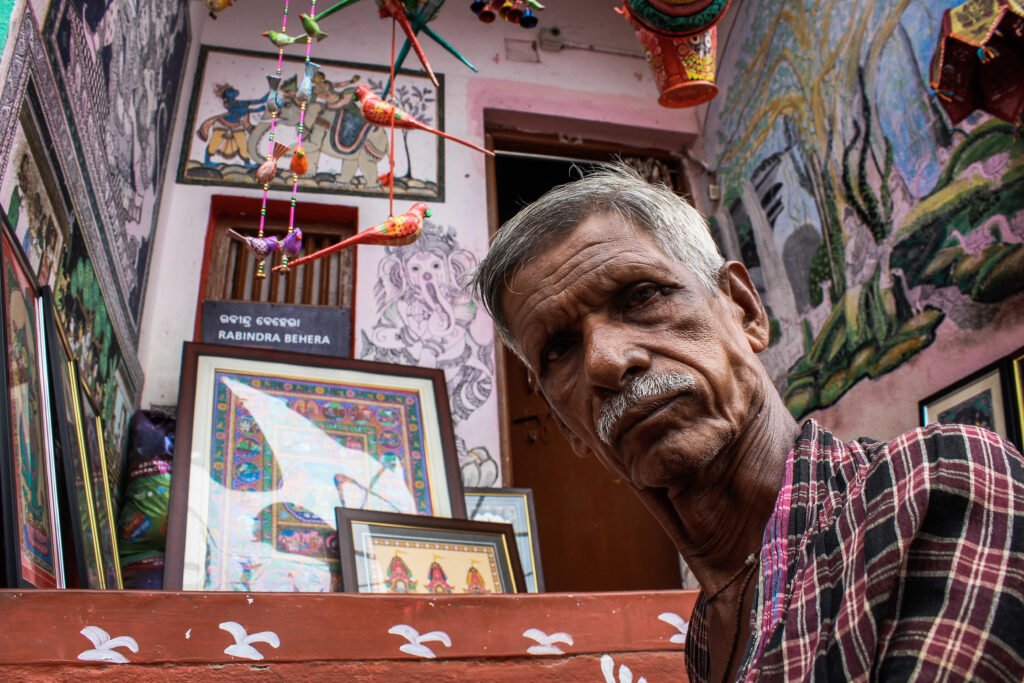
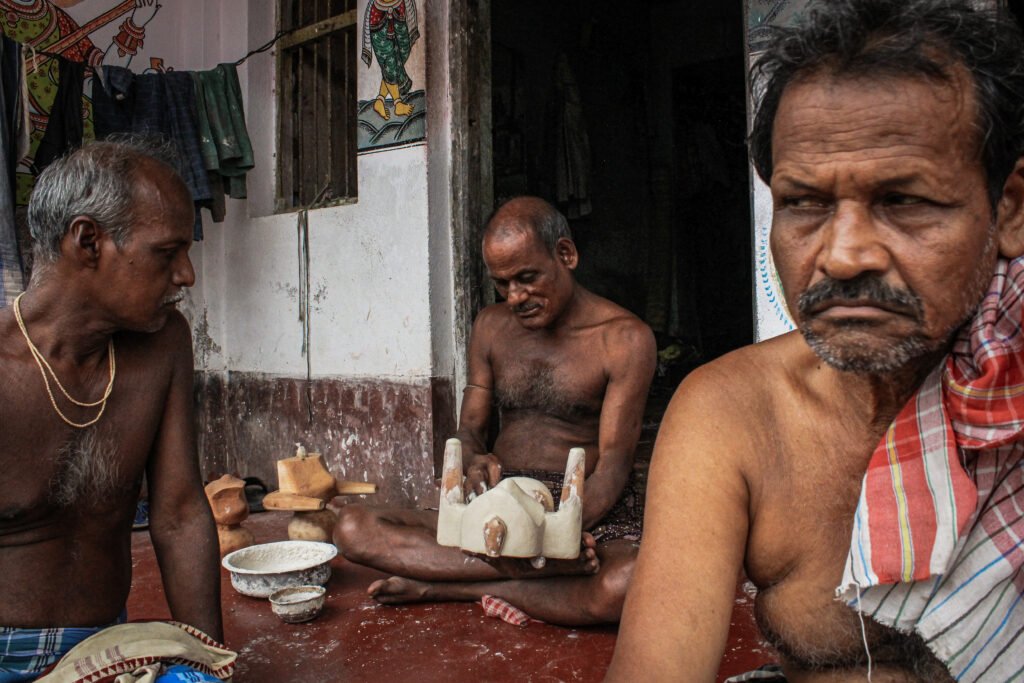
Not every lesson was learned with a brush. Between work, artisans gathered to talk, share ideas, and continue routines that have shaped the rhythm of village life for decades. These conversations reminded me that heritage survives not only through finished artworks, but through the people who spend their lives passing knowledge from one another.
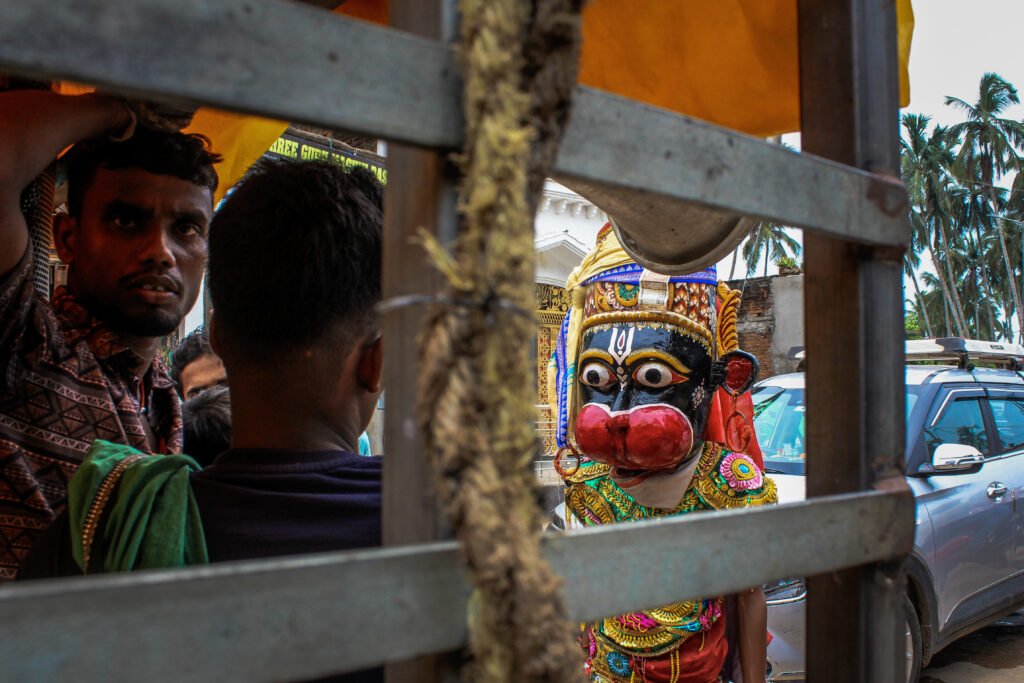
As I prepared to leave, I noticed curious faces looking beyond a small opening while the familiar image of Lord Hanuman appeared in the background. It felt like a fitting ending. The future of Raghurajpur will not depend only on preserving old paintings, but on the children who grow up surrounded by them. Long after visitors leave, life and the tradition will quietly continue.