
Documented by Amrit Panigrahy
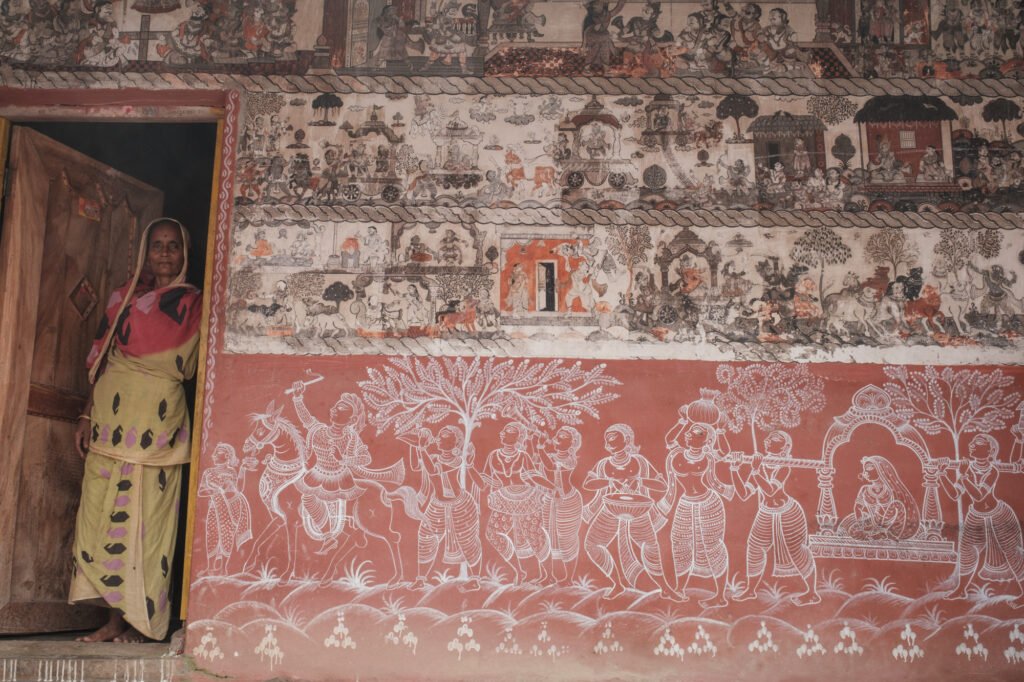
I remember my first morning in Raghurajpur. I spent the first hour just standing still, trying to make sense of the geometry. You walk down the lane, and you don’t see houses; you see canvases. Every wall, every pillar, every doorway is an extension of a story that’s been told here for generations. When you see a woman standing in a doorway framed by a mural that spans the entire wall, you realize that the art here isn’t something that’s curated, framed, or hung in a gallery. It is the skin of the house itself.
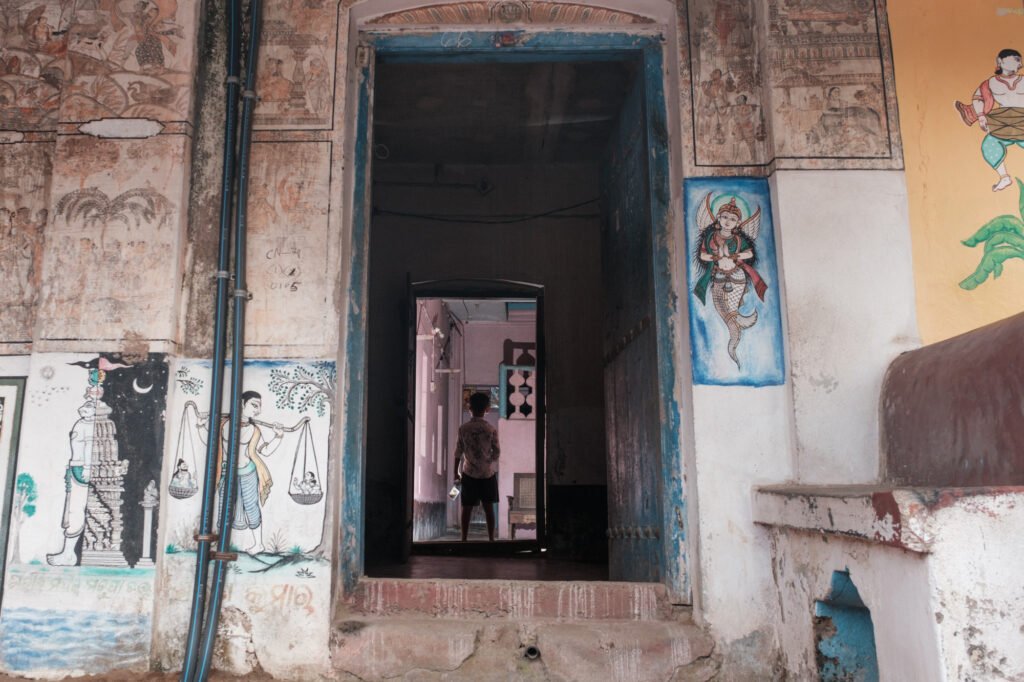
To enter a home here, you often walk through a series of concentric doorways. It feels like stepping through layers of time. You watch a child walk through these halls, oblivious to the historical weight of the walls, and you get the sense that this art is their natural environment. It’s not “heritage” to them; it’s just the hallway.
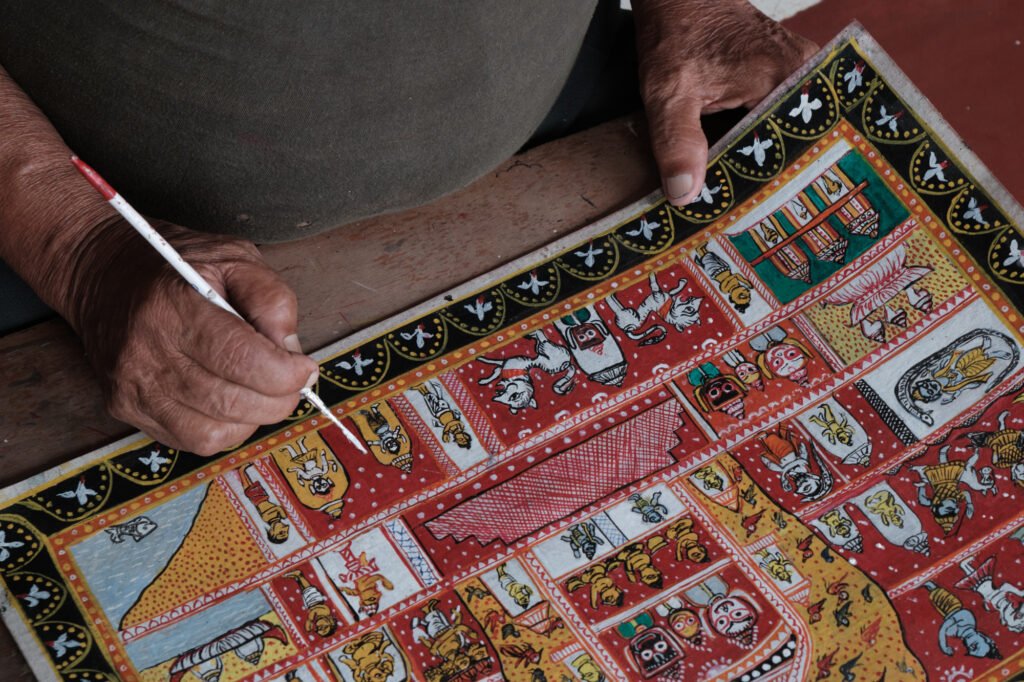
Inside, the air is thick with the scent of earth and pigments. I spent an afternoon watching an artist at work. The process is painfully, beautifully slow. You look at these intricate lines and you think, ‘How does a human hand do that?’ Then you zoom in on their grip, the slight tremor, the absolute, unwavering focus, and you realize the brush is just a natural extension of their fingers. They aren’t ‘making’ art; they are simply channeling it.
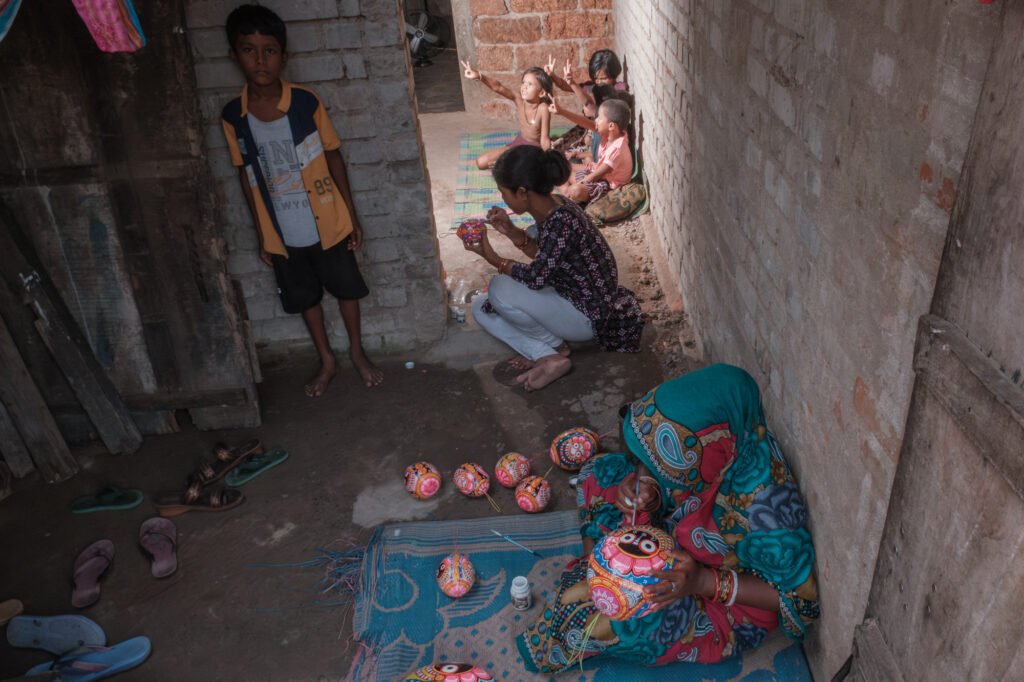
The most striking thing isn’t the painting; it’s the rhythm of the village around it. I watched a group of kids sitting on the dirt floor, not playing with toys, but just watching their mother paint. They’re learning by osmosis.
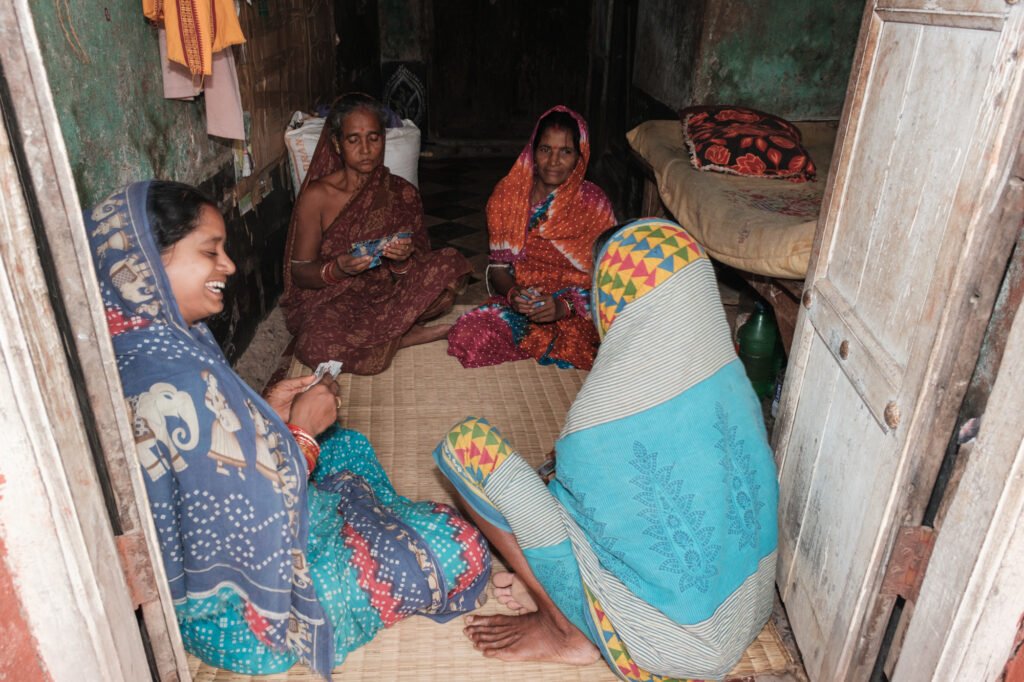
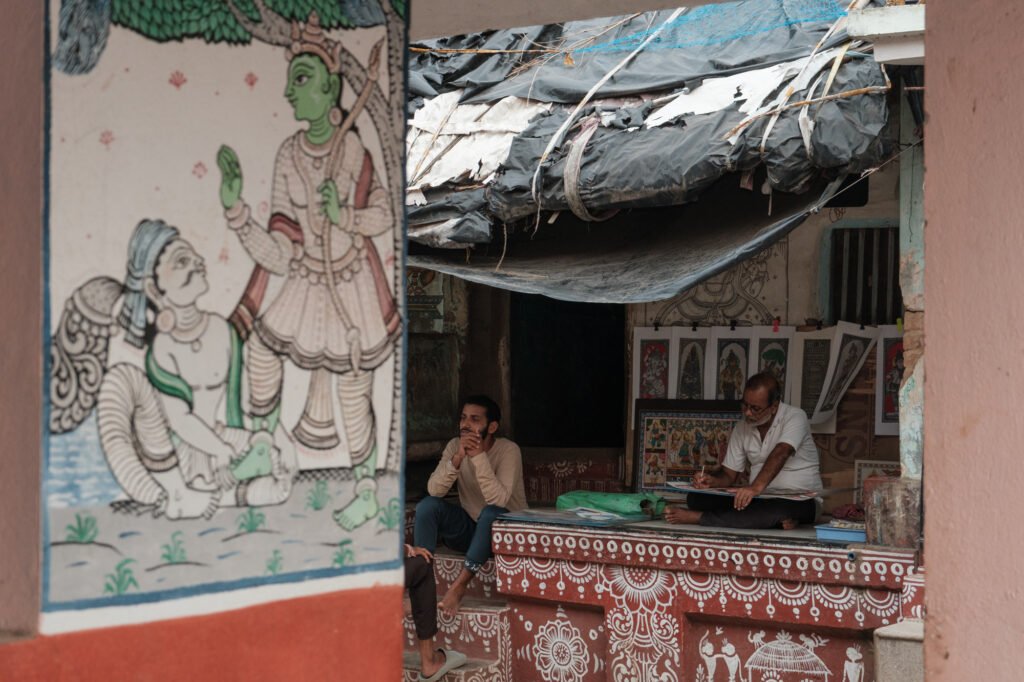
But then, when the sun gets high and the brushes are put down, the village transforms. The women gather for a game of cards, and for a few hours, the artist becomes a neighbor, and the master becomes a friend. It’s that balance, the intensity of the craft and the casual nature of the break, that makes this place feel so alive.
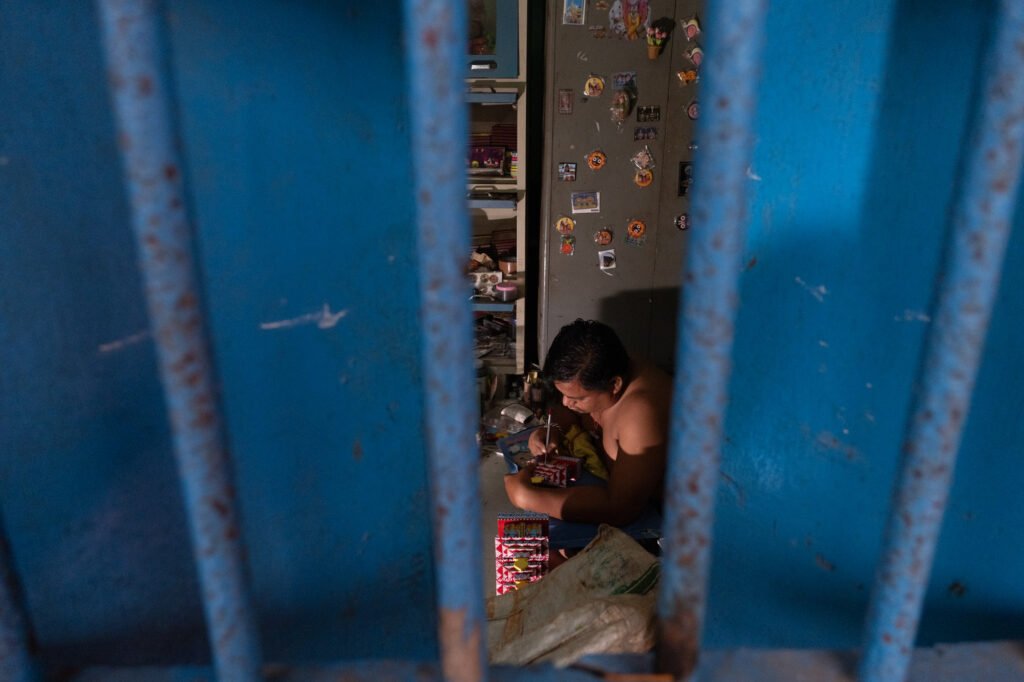
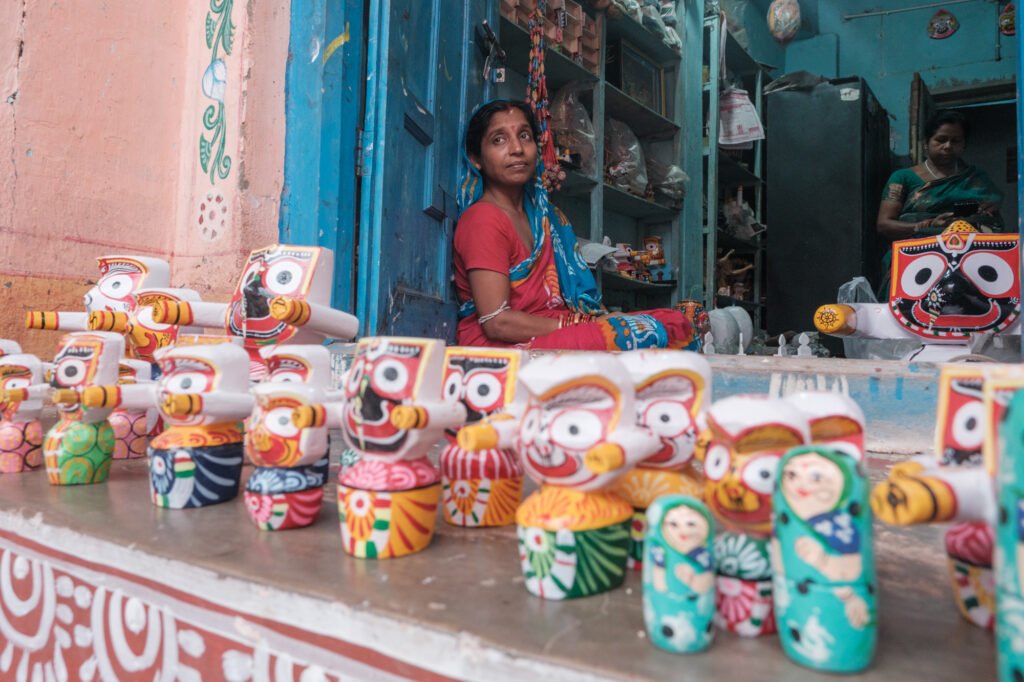
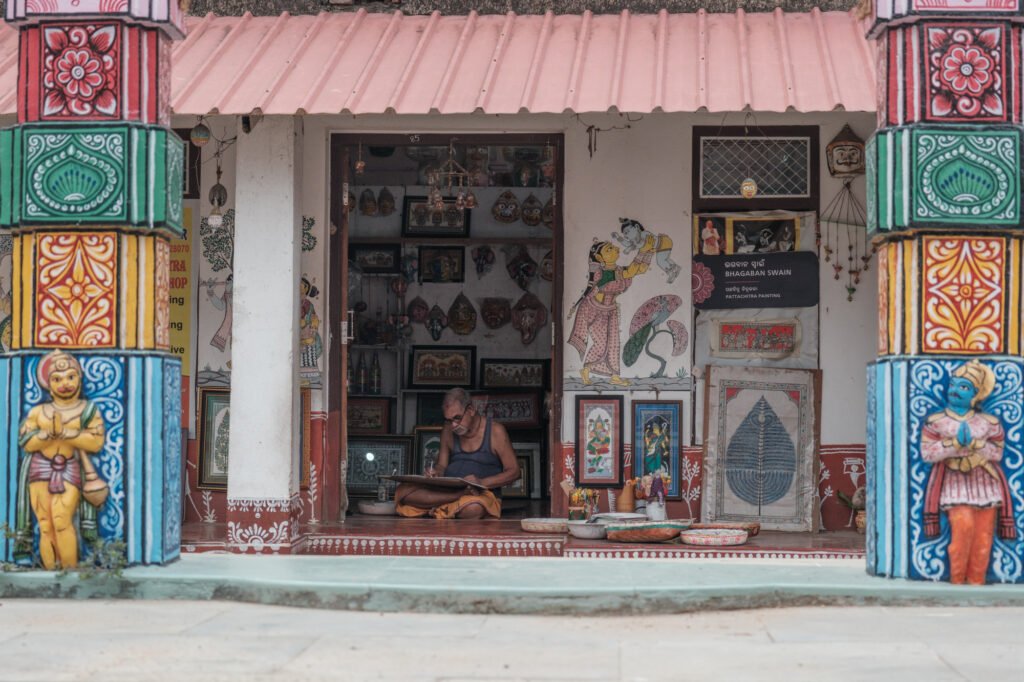
I think about the people working behind those blue iron bars, secluded in their own private world of color, contrasted against the bright, bold Jagannath figures sitting out on the porch for the world to see. It’s this constant push-pull between the private labor of the craft and the public display of the culture.
A few doors down, another man was fast asleep on a mat with his cat curled into his side.
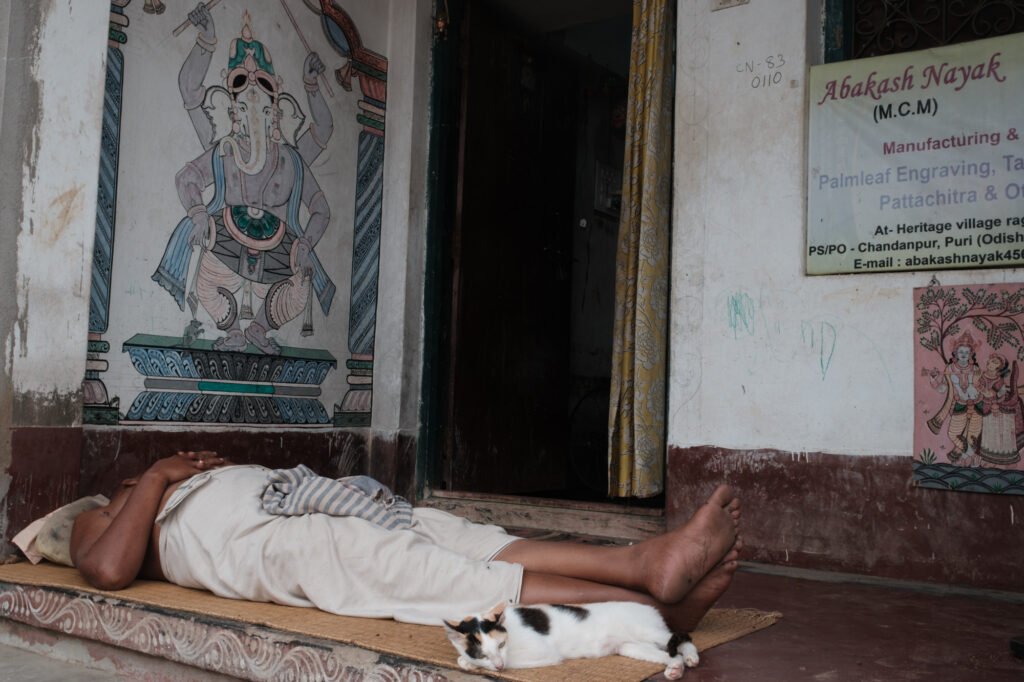
In the heat of an Odisha afternoon, everything slows down. The art, the history, the labor, it all pauses. I stood there for a long time, watching them breathe, realizing that this is what it really means to live inside the art. You stop fighting the rhythm of the day and you let the mural-covered walls hold you, like they’ve held everyone else who lived there before.
That is the secret to Raghurajpur. You don’t come here to see the art; you come here to learn how to exist within it.