
As documented and narrated by Sourabha Samrat.
The modern world is increasingly embracing minimalism in its cultural expressions. At the same time, globalization has brought a growing sense of uniformity to our lifestyles. India, however, remains home to numerous tribal communities that continue to preserve their distinctive cultures and sustainable ways of life.
These communities offer a valuable perspective on living in harmony with nature. Their practices are deeply rooted in their relationship with forests, land, and natural resources. At a time when environmental degradation is becoming devastatingly evident, the knowledge preserved by indigenous communities offers meaningful lessons for a more sustainable future. Their traditions are not merely remnants of the past; they represent living cultures that hold deep relevance today.
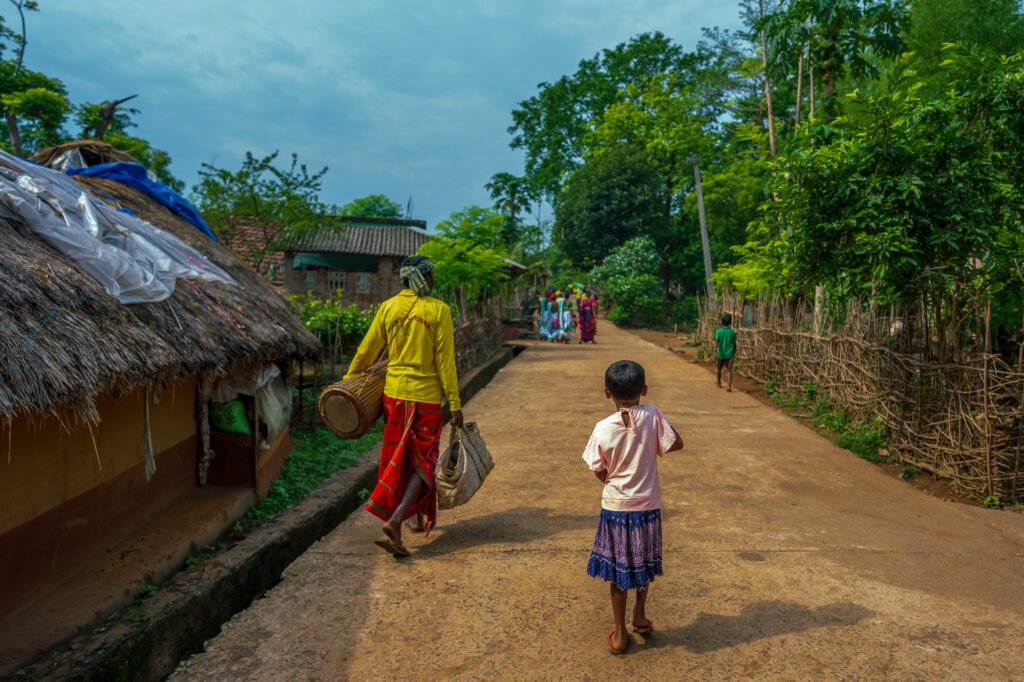
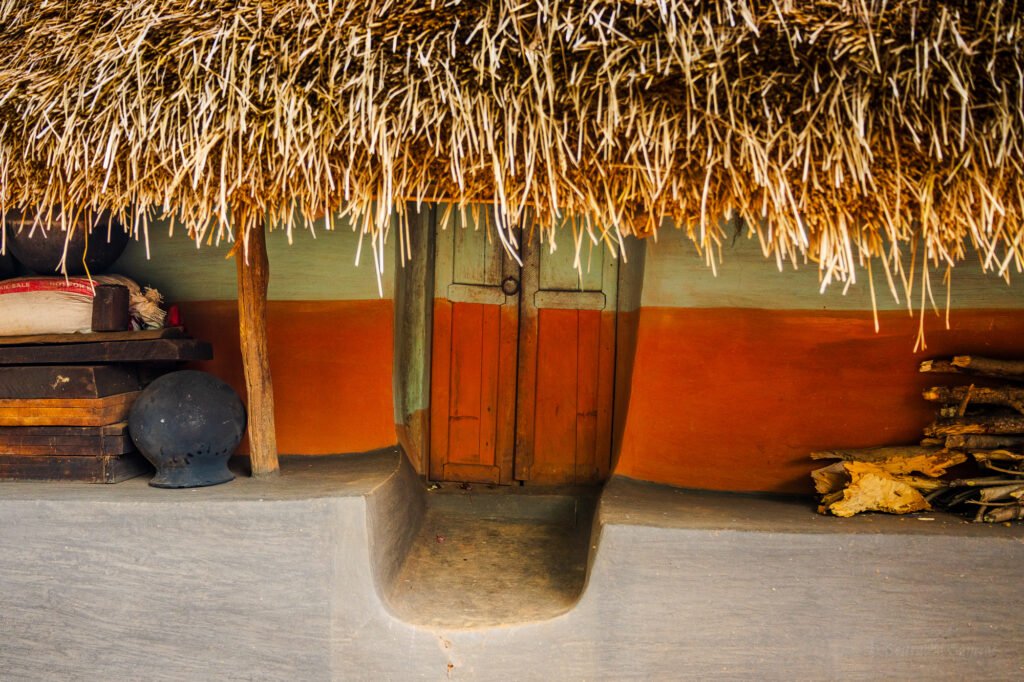
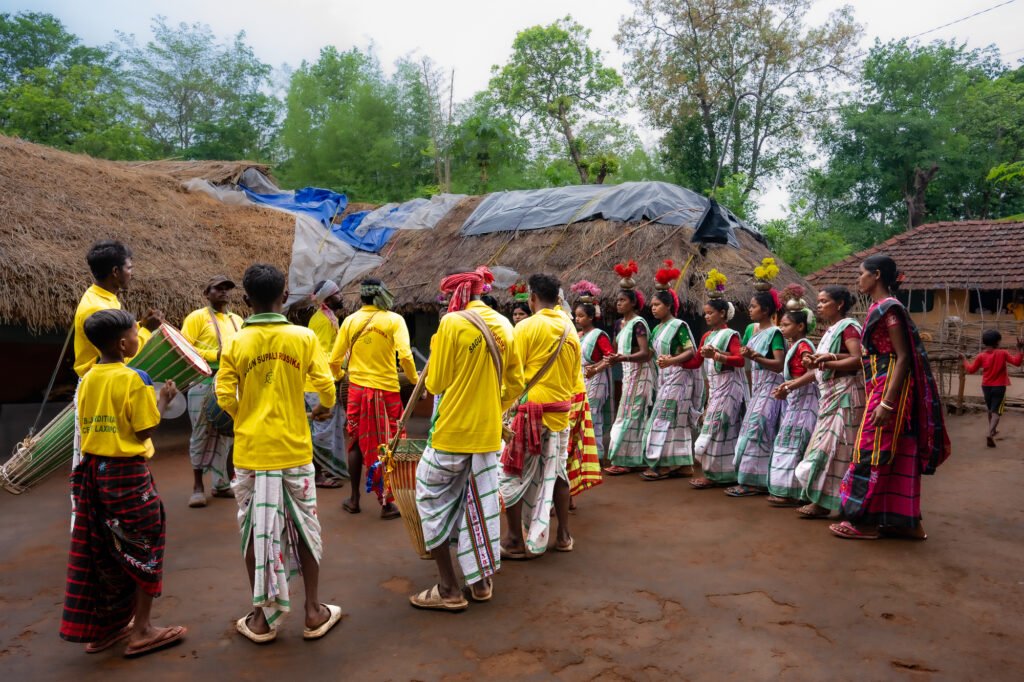
In the foothills of the Similipal Forest, tribal communities like the Santhal, Ho, Bathudi, Bhumija, and Khadia draw their livelihoods from the land. I have lived in Mayurbhanj for over four years, becoming familiar with the vibrant lifestyle of the Santhal tribe. Yet, it was only recently that I experienced their traditional dance in its full glory, a visual retreat at dawn in a nestled hillock village.
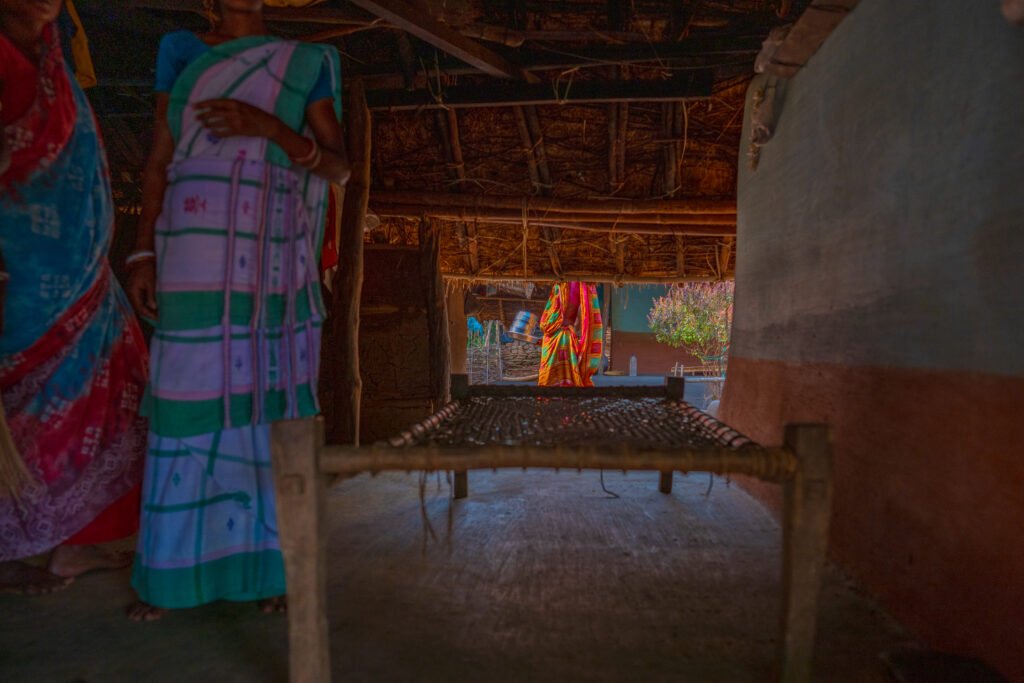
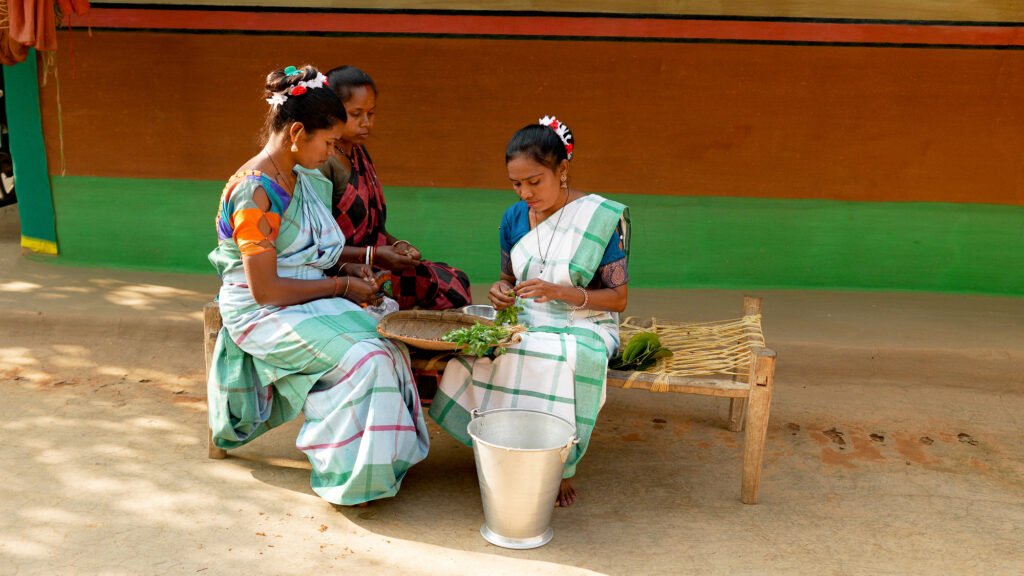
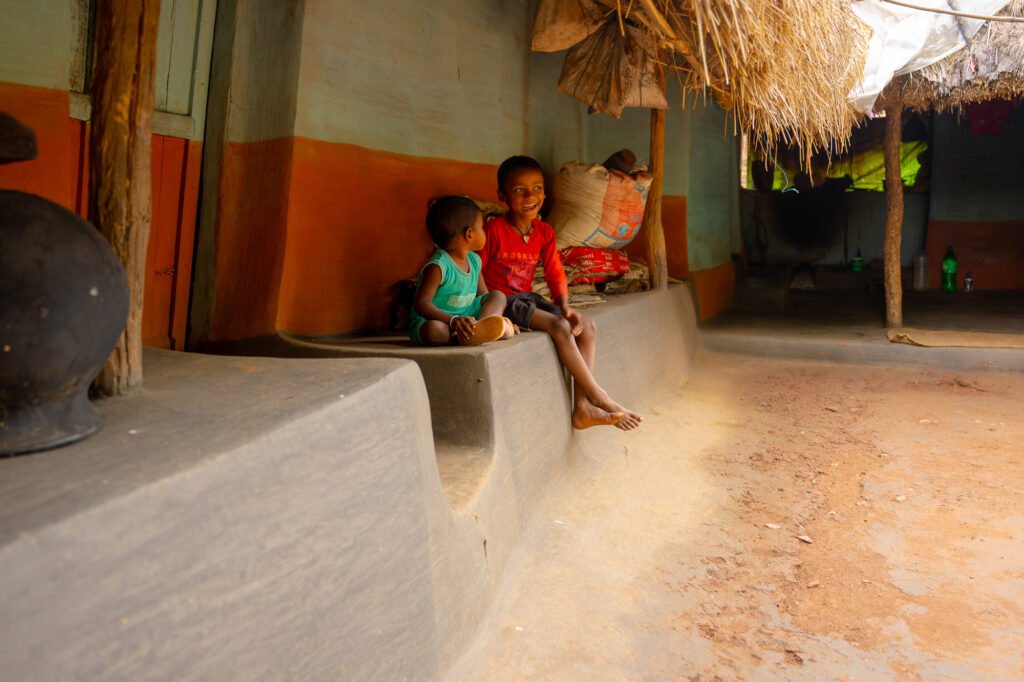
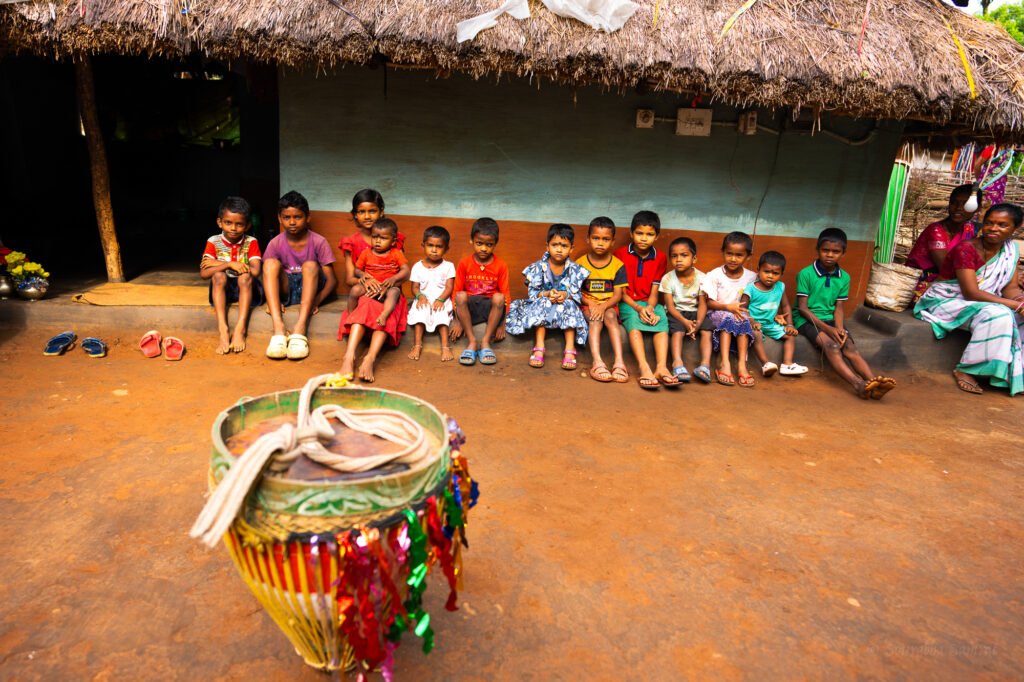
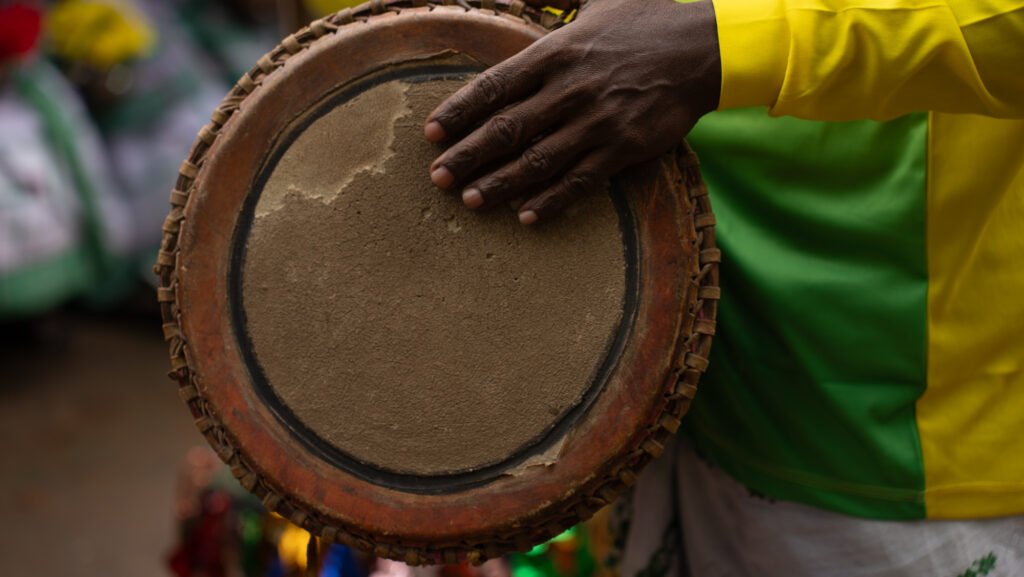
The Santhal dance is a vibrant folk tradition where men and women form fluid, circular rows, moving with rhythmic footsteps to the beats of indigenous tumbak drums. Dancers wear handwoven cotton textiles featuring characteristic check patterns, stark green and red borders, and accessories of flowers and metal ornaments. They perform during harvests and weddings as an expression of pure joy and unity.
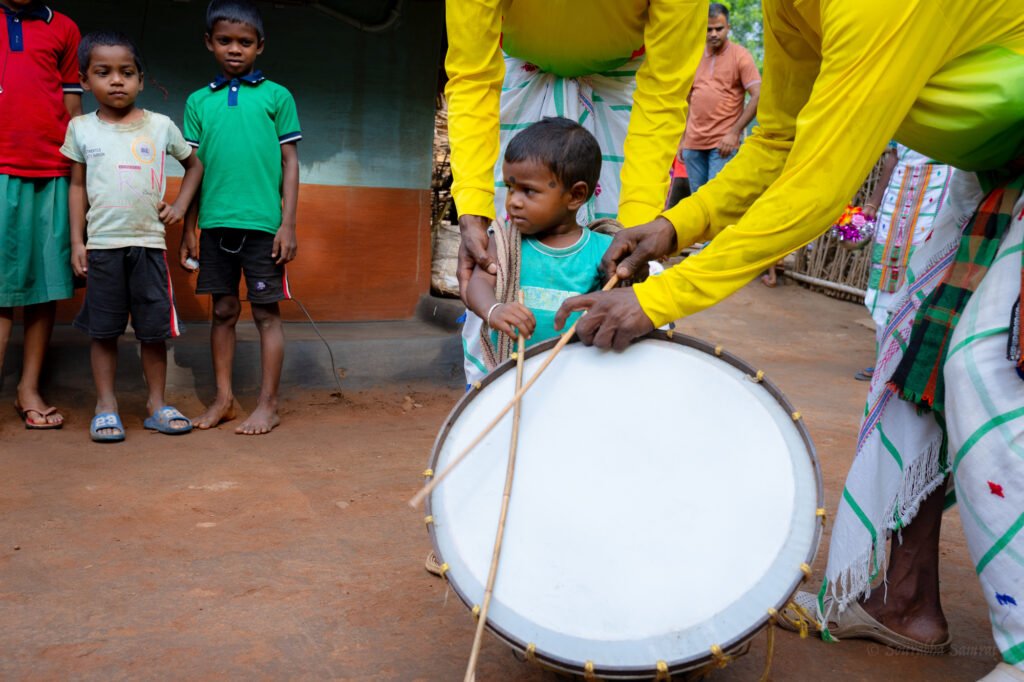

Surrounded by their earthen houses painted with natural colors and geometric motifs, witnessing this heritage makes me rethink the very definition of material wealth. Preserving these traditions is essential for safeguarding both the cultural and ecological values of the Similipal landscape.
About Sourabha: Sourabha is a visual artist and wildlife photographer exploring the intersection of nature, observation, and storytelling. She documents forest landscapes and communities deeply connected to the natural world. Exhibited at Bhubaneswar’s Lalit Kala Akademi, she uses the camera to meticulously observe, while her oil paintings express her deepest interpretations of the human-wildlife connection.