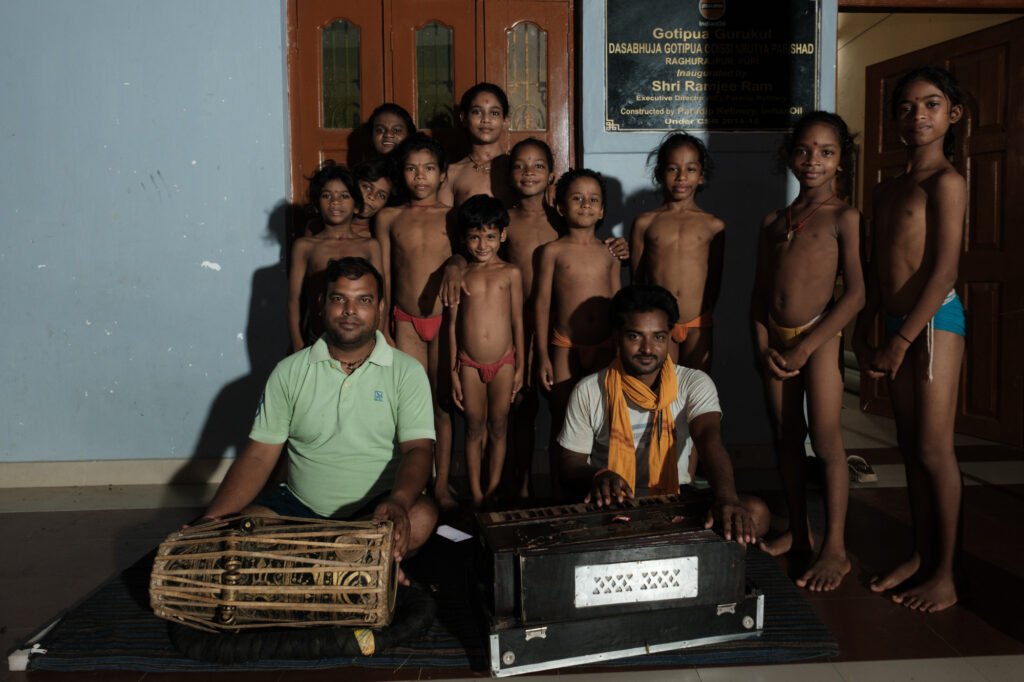
Documented by Amrit Panigrahy
The air in Raghurajpur does not merely hang; it clings. On this particular evening, the coastal Odisha humidity is a physical weight, thick with the scent of wet earth, damp masonry, and impending rain. It is past sundown, the hour when the heritage village usually retreats into the quiet rhythm of dinner preparations. But inside the open-air akhada (training courtyard), the night is just beginning to breathe.
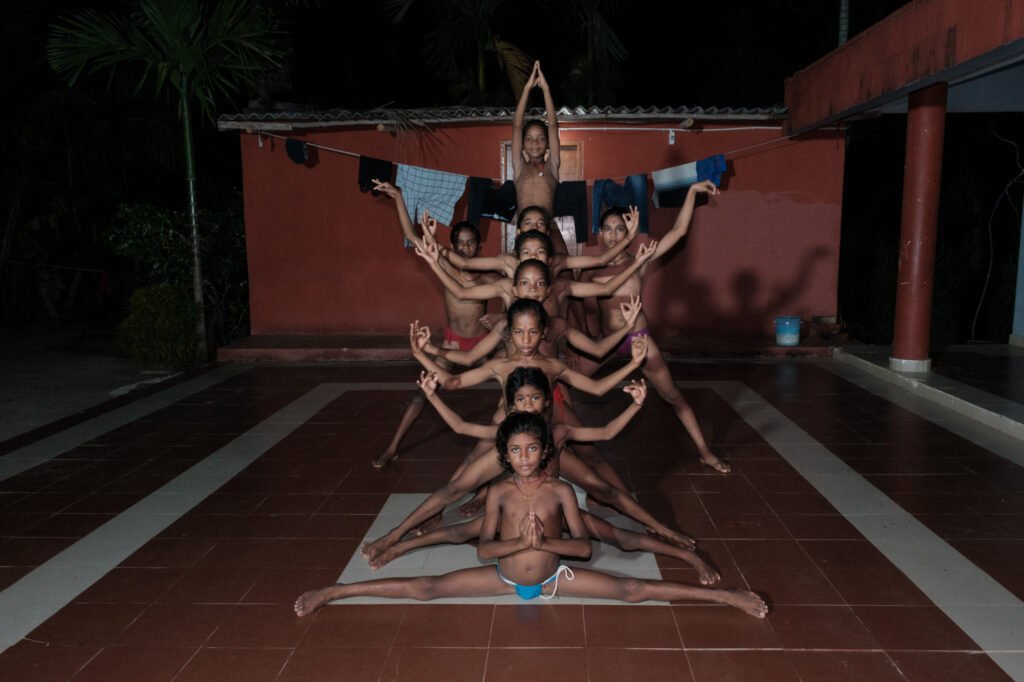
These are the Gotipua dancers. They are not yet the divine, silk-draped incarnations of Radha and Krishna that audiences see on grandly lit stages. Right now, they are just local boys who have just finished their evening school tuitions. Less than an hour ago, their hands were cramped around pencils, wrestling with mathematics and Odia grammar under the pale glow of fluorescent bulbs. Now, those same notebooks are shoved into frayed backpacks, tossed haphazardly against the vibrant, Pattachitra-painted walls of the village.
Here, in the stifling heat of the evening, the transformation begins.
At 4, they start practicing.
At 8, they dress as goddesses.
At 12, it will be over. They will just be boys again.
Gotipua is a dance tradition older than Odissi itself, performed only by young boys, only while their bodies are still androgynous enough to hold both worlds at once. There is a window. It is very small. And they spend every morning and evening of their childhood trying to be worthy of it.
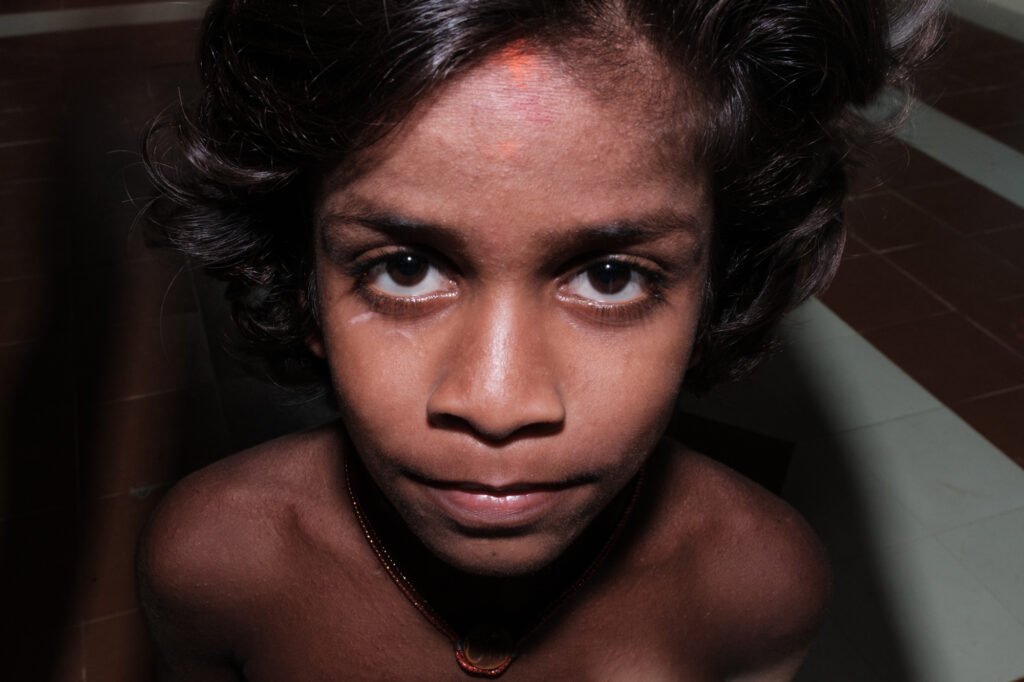
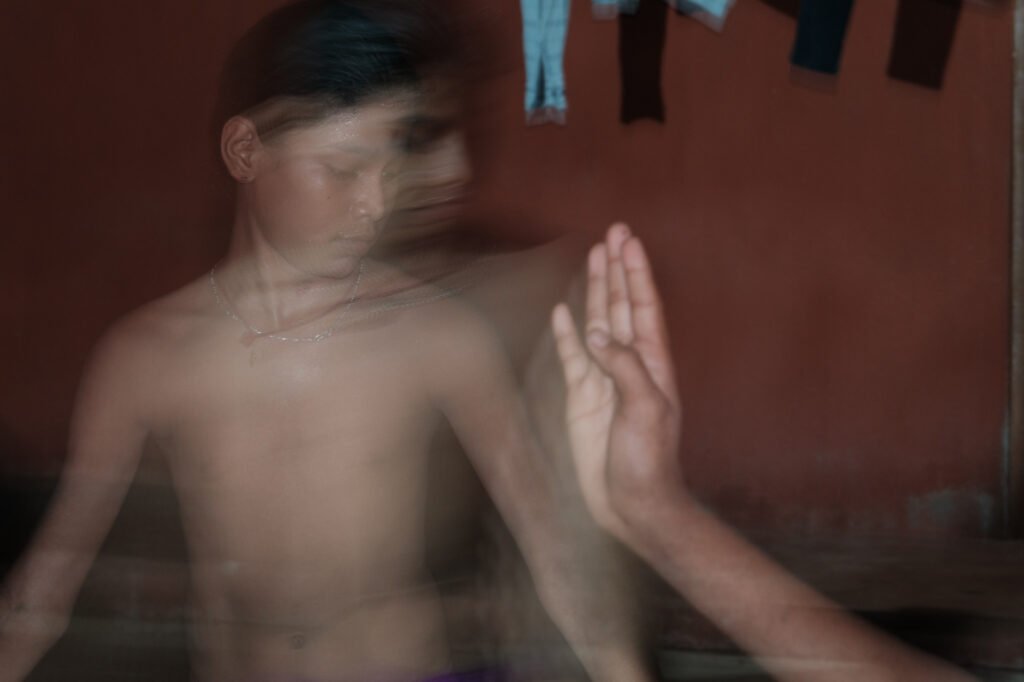
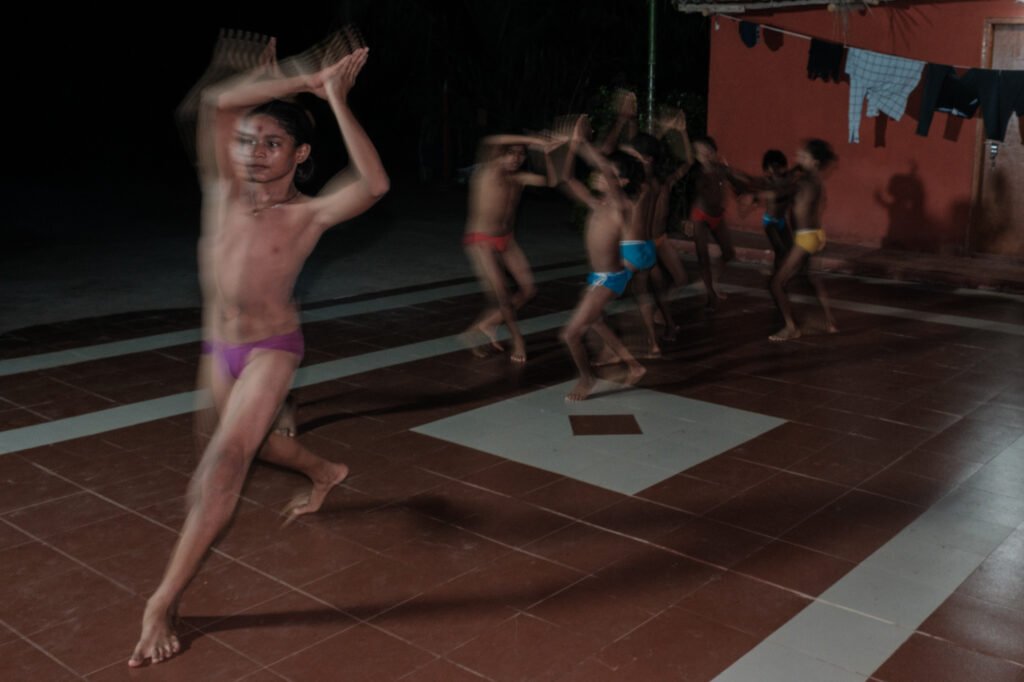
This inherent impermanence is why every image in this documentary was shot using a slow shutter speed paired with a sudden burst of flash. I did not want to merely document their postures; I wanted to capture what it actually feels like to witness them.
By leaving the shutter open longer, the camera records the chaotic, kinetic energy of the akhada, the sweeping arcs of their arms and the violent spins become a ghost-like smear of motion. But the sudden pop of the flash pierces through that blur, freezing their faces and expressions in hyper-focused clarity for a fraction of a second. The resulting images are ethereal and slightly unmoored from reality. It is a visual metaphor for their very existence as Gotipua dancers: anchored in a fleeting, brilliant moment, even as time and motion drag them inevitably forward toward the end of their window.
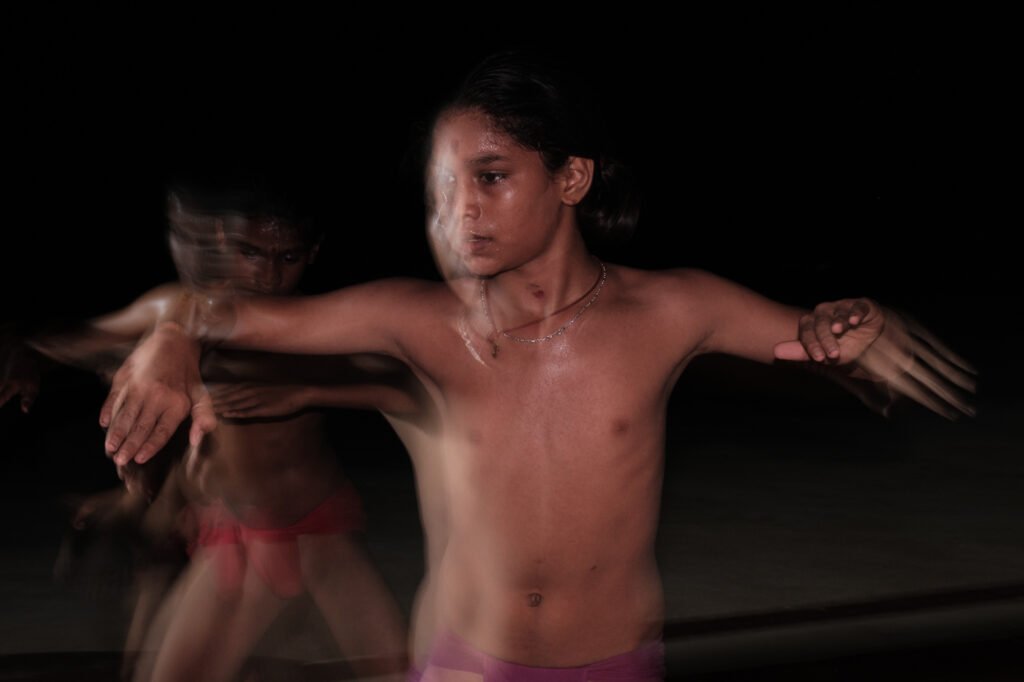
The practice space is stripped of all glamour. There is no stage makeup, no heavy silver jewelry, no floral adornments tied into their hair. There is only bare earth, the rhythmic slap of calloused feet, and the sharp, unrelenting voice of their Guru cutting through the humid air.
You can read the exertion on their bodies. Sweat beads on their foreheads, catching the harsh light before rolling down their bodies to soak the waistbands of their loin clothes. The physical demand of Gotipua is staggering. It requires the grace of a seasoned ballerina and the explosive, gravity-defying core strength of a gymnast.
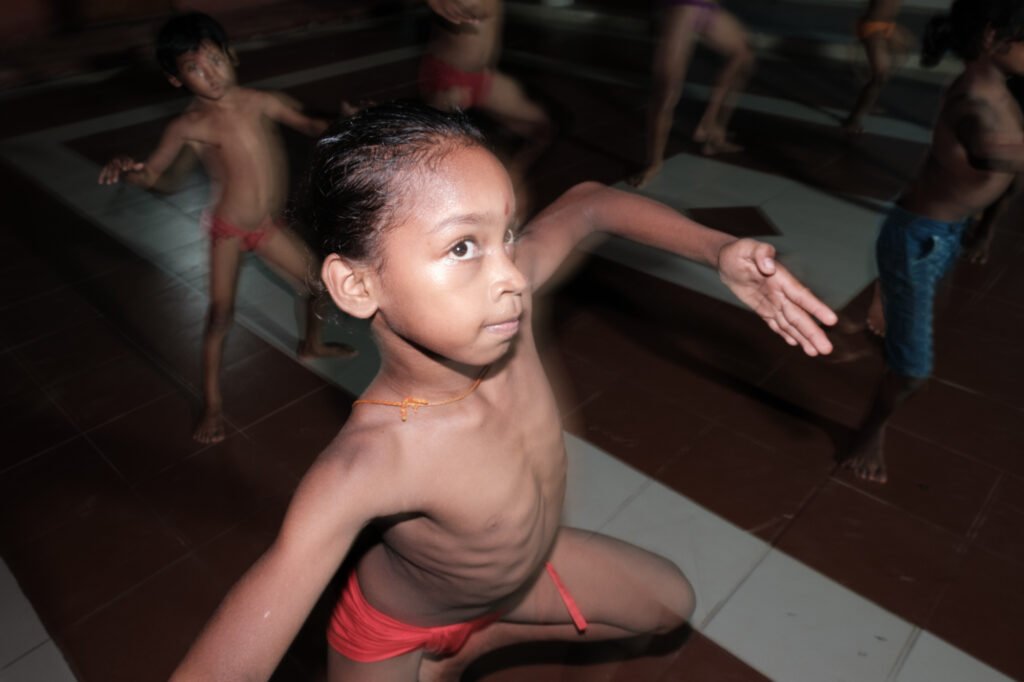
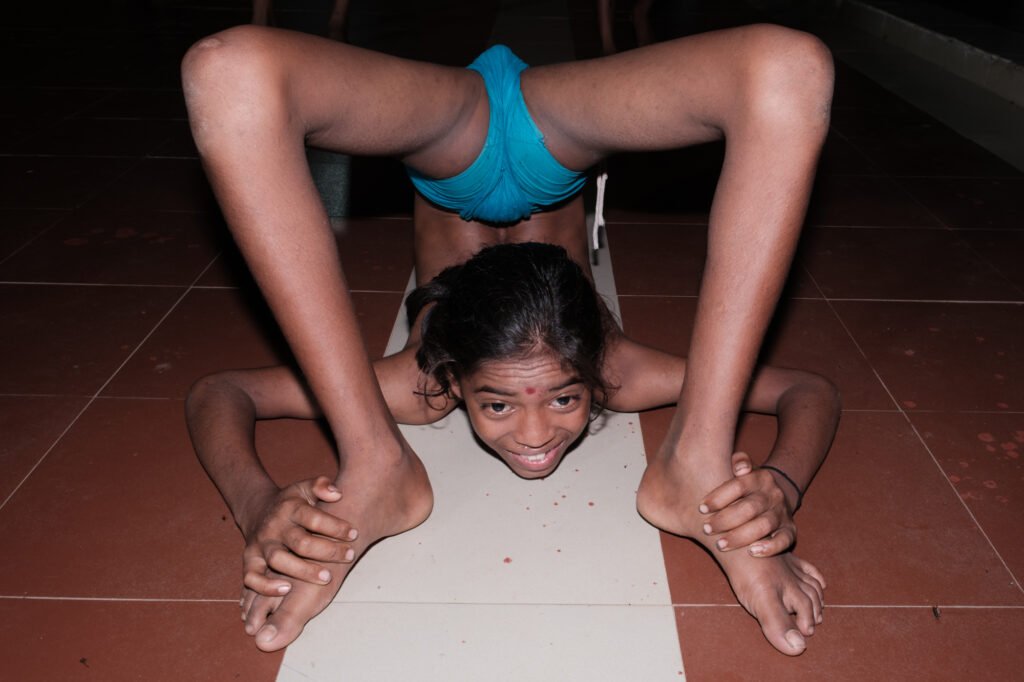
In one corner, a eight-year-old boy stretches his legs far beyond the limits of natural human anatomy. His face is a mask of unreal ease, a stark contrast to the playful mischief that likely dominated his school day. He pushes through the burning in his muscles, flattening his chest to the floor. The humidity makes the floor slick, yet it also keeps their young muscles warm and pliable, a necessary mercy in a routine that demands such brutal contortions.
As the practice intensifies, the rhythmic thud of the Mardala (traditional drum) joins the chorus of crickets outside. The boys move into the Bandha Nritya, the complex, acrobatic poses that define the art form.
Through the lens, bodies fold backward into perfect circles. Spines arch until the tops of their heads rest comfortably between their palms. They lift each other into intricate human pyramids, balancing entirely on the trembling thighs and locked shoulders of their peers. Their chests heave, pulling in the thick, oxygen-heavy air. Every muscle shakes under the strain, yet the flash captures their faces frozen in eerie serenity as time moves around them, a quiet preparation for the half-smiles they must wear when performing for the divine.
It is in these grueling repetitions that the true weight of their heritage is visible. They are not just learning a dance; they are acting as the physical vessels for a centuries-old tradition born in the temples of Puri. The sweat pooling at their collarbones is the price of keeping history alive.
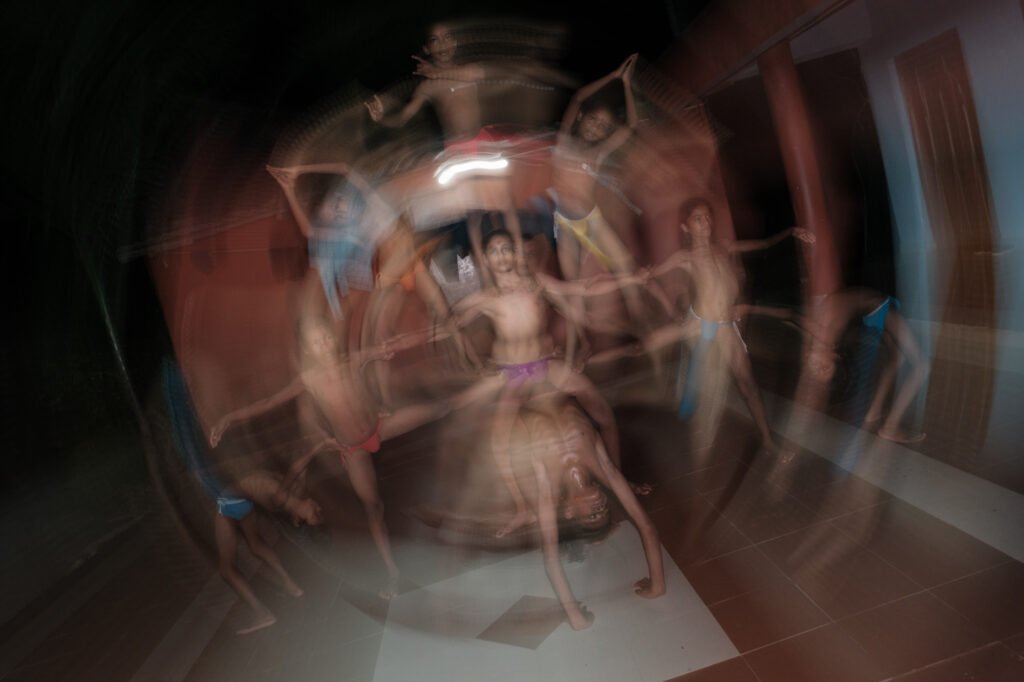
What strikes you most, watching them in the dim, sultry light, is the profound duality of their existence. When a boy misses a beat or loses his balance, tumbling from a human pyramid onto the dusty floor, the illusion briefly shatters. He rubs his elbow, flashes a sheepish, toothy grin at his friend, and for a split second, he is just a child again—the same boy who groans about math homework and chases stray dogs through the village alleys.
But a sharp clap from the Guru instantly pulls them back. The smiles vanish. They reset their posture, becoming vessels once more, acutely aware of the clock ticking on their fleeting androgyny.
By the time the practice winds down, the night is pitch black. The boys are entirely spent, their chests rising and falling in rapid, exhausted rhythm. They bow to the earth, touching the dust of the akhada to their foreheads in a final act of reverence.
As they grab their schoolbags and spill out into the humid village lanes, their voices rise in youthful chatter, echoing against the mud-brick homes. They are tired, sticky, and facing another day of school tomorrow. But in the quiet dust of the courtyard they leave behind, the vibrations of their devotion linger, a testament to young boys racing against time, carrying the weight of an ancient world before they simply outgrow it.